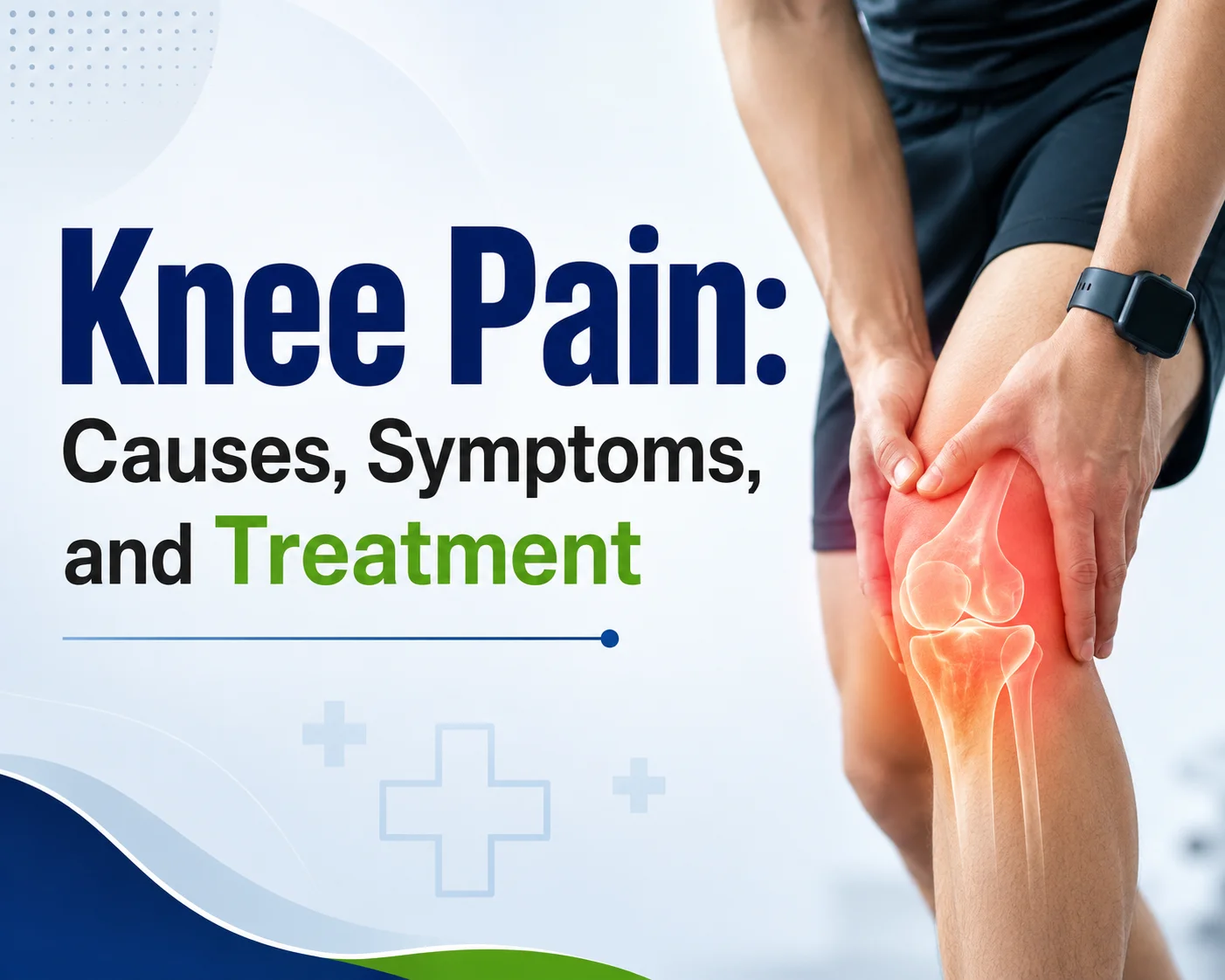
Knee Pain: Causes, Symptoms, Treatment and When to See a Doctor
Knee pain can make walking, climbing stairs, getting up from a chair or even sleeping uncomfortable. It may start after an injury, develop gradually or appear without an obvious reason.
The right treatment depends on what is causing the pain. This guide explains common causes, symptoms to look out for, ways to manage mild discomfort and signs that need medical attention.
Medical note: This article provides general health information. It cannot diagnose the cause of your knee pain.
What Are the Common Causes of Knee Pain?
The knee contains bones, cartilage, ligaments, tendons and fluid-filled structures that help it move smoothly. Pain can arise from any of these tissues, and similar symptoms may have different causes.
Knee osteoarthritis
Osteoarthritis affects the joint and may cause pain during movement, stiffness after rest, swelling and difficulty with everyday activities. Symptoms can vary from day to day.
Sprains and strains
A sudden twist, fall or awkward movement can stretch or damage a ligament or muscle-tendon structure. Pain, tenderness and swelling may follow.
Meniscus or ligament injury
Sports injuries or twisting movements can damage the meniscus or ligaments. Some people notice swelling, a feeling of instability, locking or difficulty straightening the knee.
Tendon pain
Repeated running, jumping or sudden increases in activity can irritate a tendon around the knee. Pain may be more noticeable during or after exercise.
Bursitis
A bursa is a small fluid-filled sac that reduces friction near a joint. Inflammation can cause localized pain and swelling, sometimes after repeated kneeling or pressure.
Gout or inflammatory arthritis
Some conditions cause a hot, swollen and painful joint. A sudden attack may be due to gout, while inflammatory arthritis can cause ongoing pain and stiffness.
These are possibilities, not a self-diagnosis checklist. Infection and fractures are less common causes but can be serious and need prompt assessment.
What Does Your Knee Pain Feel Like?
The location, timing and type of pain can help a clinician narrow down the possible causes. However, symptoms alone cannot confirm a diagnosis.
- Pain when climbing stairs: can occur with osteoarthritis, kneecap-related problems or other conditions.
- Pain after running or exercise: may be associated with overuse or tendon irritation, particularly after a sudden increase in training.
- Pain and stiffness after sitting: may occur with osteoarthritis or other joint problems.
- Swelling after a twist or fall: can indicate an injury that needs assessment.
- Locking or giving way: may indicate a structural problem and should be assessed, especially if it is new or painful.
- Sudden severe pain with heat and swelling: may indicate gout or a joint infection and needs urgent medical attention.
Why Does Your Knee Hurt When Walking or Climbing Stairs?
Walking and stair climbing place different demands on the knee. Pain during these activities may occur when the joint is irritated, muscles are weak, a tendon is overloaded or arthritis affects movement.
Pay attention to whether the pain started suddenly or gradually, whether the knee swells, and whether you can bear weight normally. This information can help your clinician decide what assessment or treatment is needed.
Read more: Why Does My Knee Hurt When Climbing Stairs?
How Can You Manage Mild Knee Pain at Home?
If the pain is mild and there are no warning signs, the following steps may help while you monitor your symptoms.
- Modify painful activities: temporarily reduce movements that clearly worsen the pain. Avoid pushing through sharp or increasing pain.
- Apply a wrapped cold pack: use it for up to 20 minutes at a time to help with pain or swelling. Do not place ice directly on your skin.
- Keep moving gently: avoid prolonged complete inactivity when movement is safe and comfortable. Return to activity gradually.
- Elevate the leg: if the knee is swollen, raising the leg while resting may help with comfort.
- Choose supportive activity: once acute injury has been ruled out, suitable low-impact movement and strengthening may help, especially with osteoarthritis.
- Ask about pain relief: a doctor or pharmacist can help you choose an option that is appropriate for your health and other medicines.
Do not use home treatment as a reason to delay urgent care after a serious injury or when the knee is hot, red and swollen with fever.
Medical Treatments for Knee Pain
A clinician will recommend treatment based on the likely cause, severity, your general health and how much the pain affects daily life.
| Treatment | When it may help | Important point |
|---|---|---|
| Physiotherapy | Many ongoing knee problems, including osteoarthritis and recovery from selected injuries. | Exercises should match your diagnosis, ability and recovery stage. |
| Medication | Short-term symptom relief or management of an underlying condition. | Some pain medicines are unsuitable for people with stomach, kidney, liver or heart problems, or those taking certain medicines. |
| Injections | Selected conditions when a clinician considers them appropriate. | Benefits vary; injections are not a permanent solution for every cause of pain. |
| Surgery | Some significant injuries or severe joint disease when appropriate non-surgical treatment is not enough. | The need and type of surgery depend on individual assessment. |
For knee osteoarthritis, NICE recommends tailored therapeutic exercise and weight management when appropriate. Medicines may be considered alongside these measures, taking account of individual risks. Not everyone with knee pain needs a scan, injection or operation.
Can Exercise Help Knee Pain?
For many people with osteoarthritis, suitable exercise helps strengthen the muscles around the joint, improve function and support daily activity. It is often best to begin at a manageable level and build up gradually.
- Ask a physiotherapist which strengthening exercises are suitable for your condition.
- Consider low-impact activity, such as stationary cycling or water-based exercise, if appropriate.
- Adjust the exercise if pain becomes sharp, swelling increases or your ability to walk worsens.
- After an acute injury, get advice before restarting exercise if you cannot move the knee normally or bear weight.
Some discomfort can occur when beginning an exercise programme for osteoarthritis, but the plan should be adapted to your needs. Persistent worsening symptoms deserve reassessment.
When Should You See a Doctor for Knee Pain?
Arrange a medical assessment if knee pain keeps returning, is getting worse, affects sleep or daily activities, or does not improve with reasonable home care. You should also seek advice if the knee repeatedly locks, gives way or remains swollen.
Warning signs that need urgent medical attention
- You cannot move the knee or put weight on the leg.
- The knee is badly swollen, looks deformed or became very painful after a fall or injury.
- The knee is hot or red and you have a fever, chills or feel unwell.
- The knee locks or gives way and you cannot safely walk.
- You have severe pain that started suddenly without a clear explanation.
These symptoms may require urgent assessment. If the injury is severe or you are unable to walk safely, seek emergency care.
How Is the Cause of Knee Pain Diagnosed?
Your clinician may ask when the pain began, what makes it worse, whether you had an injury, and whether there is swelling, stiffness or instability. They may examine your knee, walking pattern and range of movement.
An X-ray or other test may be needed if the history or examination suggests a fracture, significant injury or another condition. Imaging is not routinely necessary for every person with typical osteoarthritis symptoms.
Can Knee Pain Be Prevented?
Not every knee problem can be prevented, but a few habits may reduce avoidable strain and support joint health.
- Increase exercise intensity gradually rather than making sudden changes.
- Build leg strength and maintain general fitness with suitable activity.
- Use appropriate footwear for your activities.
- Allow recovery time after strenuous exercise or an injury.
- If you have osteoarthritis and excess weight, ask about a sustainable weight-management plan.
- Get persistent pain assessed instead of repeatedly ignoring it.
Frequently Asked Questions About Knee Pain
1. What is the most common cause of knee pain?
There is no single cause for everyone. Osteoarthritis, injuries, overuse and tendon problems are among the possible causes. The likely cause depends on your age, history, symptoms and examination.
2. Can knee pain go away on its own?
Mild pain from some minor strains or temporary overuse may improve with activity modification and time. Persistent, worsening or severe pain should be assessed rather than assumed to be harmless.
3. Is walking good for knee pain?
Gentle walking may be suitable for some people, including many with osteoarthritis, but it depends on the cause and severity. Avoid pushing through severe pain or walking on a knee that cannot safely bear weight.
4. Does knee pain always mean arthritis?
No. Knee pain can also result from injuries, overuse, tendon problems, bursitis, gout, infection and other conditions. A clinical assessment helps identify the likely cause.
5. When might knee replacement surgery be considered?
Knee replacement may be discussed when joint symptoms substantially affect quality of life and appropriate non-surgical treatments have not helped enough or are unsuitable. Read our guide: When Do You Need Knee Replacement Surgery?
6. Should I get an X-ray for every episode of knee pain?
No. A clinician decides whether imaging is needed based on your symptoms, examination and possible causes. Some conditions can be diagnosed clinically, while injuries or unusual symptoms may require tests.
Related Health Guides
- Why Does My Knee Hurt When Climbing Stairs?
- When Do You Need Knee Replacement Surgery?
- Osteoarthritis vs Rheumatoid Arthritis: What’s the Difference?
Medical disclaimer: This article is for educational purposes and does not replace advice, diagnosis or treatment from a qualified healthcare professional. Seek individual medical advice for persistent or concerning symptoms. Have a suitably qualified clinician review this article before describing it as medically reviewed.


