Do your knees hurt when you walk? Do your fingers feel stiff in the morning? Or have you noticed swelling in your hands, wrists, or other joints that does not seem to go away?
Joint pain can make everyday activities difficult. Simple things like opening a bottle, climbing stairs, getting dressed, or walking to the shop may become uncomfortable.
When you visit a doctor, you may hear the terms osteoarthritis and rheumatoid arthritis. Although both conditions affect the joints, they are not the same.
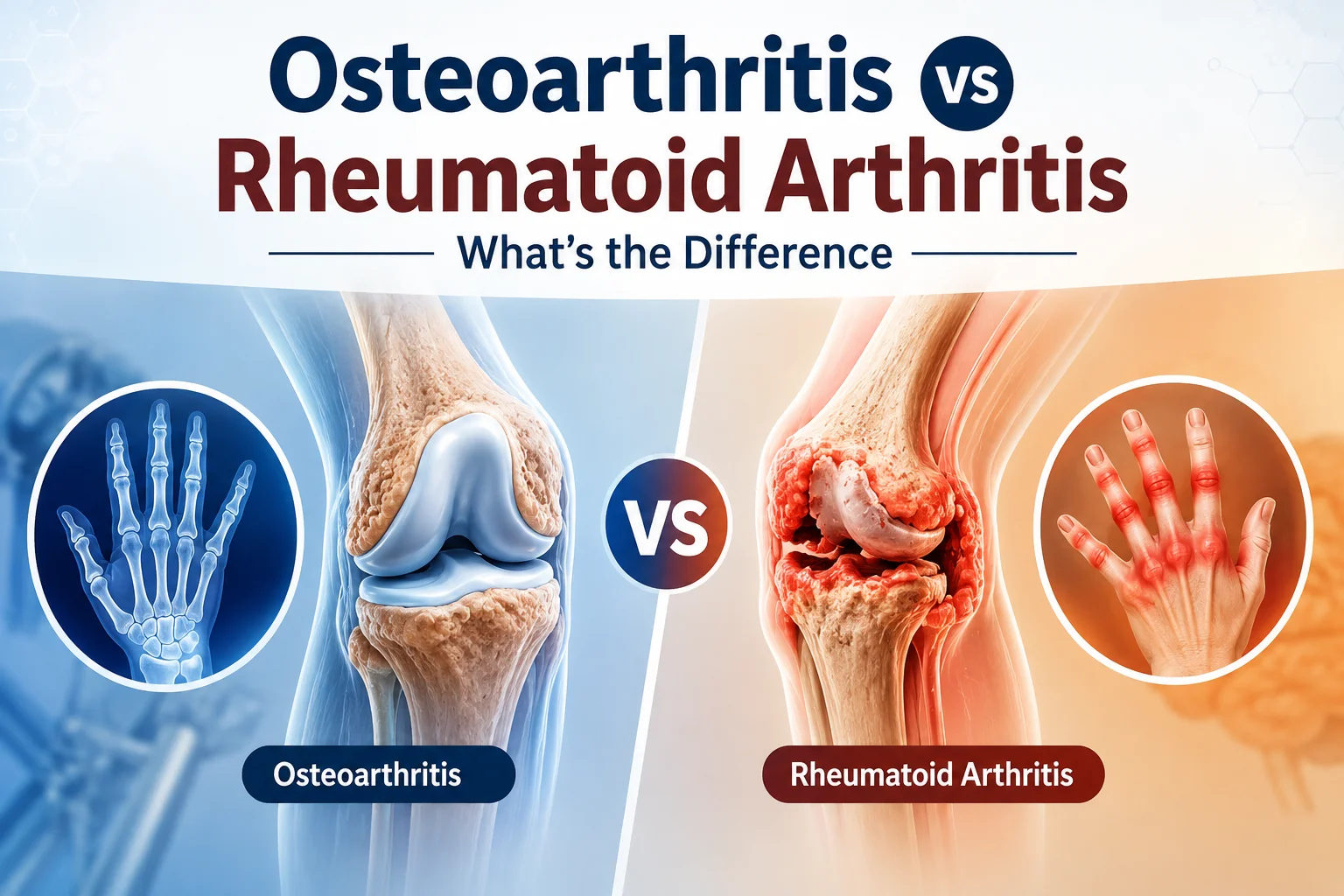
The main difference: Osteoarthritis involves changes in cartilage and other joint tissues, while rheumatoid arthritis is an autoimmune disease that causes inflammation. Both can cause pain, stiffness, and swelling, but their treatments can be different.
In this guide, we explain both conditions in simple language, how to recognise common symptoms, and when to seek medical advice.
What Is Osteoarthritis?
Osteoarthritis, often called OA, is a condition that affects the joints. It develops as cartilage and other tissues that help a joint move smoothly change over time.
Cartilage is the smooth tissue that covers the ends of bones where they meet. It helps the bones move against each other with less friction.
In osteoarthritis, the cartilage may become damaged, and changes can occur in the bone and other tissues around the joint. These changes can lead to pain, stiffness, swelling, and difficulty moving.
Osteoarthritis commonly affects the knees, hips, hands, and spine.
What Causes Osteoarthritis?
Age can increase the likelihood of developing osteoarthritis, but ageing is not the only factor. It is not a condition that everyone will necessarily develop as they get older.
Other factors may include:
- A previous joint injury.
- Repeated stress on a joint.
- Family history and genetic factors.
- Excess body weight, which can increase the load on weight-bearing joints.
- Differences in joint structure or alignment.
What Does Osteoarthritis Feel Like?
You may notice that your knee hurts after walking for some time. You might also feel stiff when standing up after sitting for a long period.
Common symptoms include:
- Pain that becomes more noticeable when using the affected joint.
- Stiffness after resting or first getting up.
- Swelling or tenderness around the joint.
- Difficulty bending or straightening the knee.
- A grinding or crackling sensation during movement.
- Reduced ability to perform everyday activities.
Morning stiffness in osteoarthritis is often relatively brief, but symptoms vary from person to person.
What Is Rheumatoid Arthritis?
Rheumatoid arthritis, or RA, is a long-term autoimmune disease.
Your immune system normally protects your body against infections. In rheumatoid arthritis, the immune system mistakenly attacks the lining of the joints, called the synovium.
This causes inflammation. Over time, ongoing inflammation can damage cartilage, bone, and surrounding tissues.
Rheumatoid arthritis often affects the hands, wrists, and feet, but it can also affect the knees, shoulders, elbows, and other joints. It may also affect parts of the body outside the joints.
What Causes Rheumatoid Arthritis?
The exact cause is not fully understood. Researchers believe that a combination of genetic, environmental, and other factors may contribute to the condition.
Factors associated with a higher risk include:
- Having certain genetic risk factors.
- A family history of rheumatoid arthritis.
- Smoking.
- Certain environmental influences.
Having one or more risk factors does not mean you will definitely develop the disease.
What Does Rheumatoid Arthritis Feel Like?
You may wake up with both hands feeling stiff and swollen. Making a fist may be difficult, and the stiffness may continue for a considerable time after you get out of bed.
Common symptoms include:
- Painful, swollen, or tender joints.
- Warmth around affected joints.
- Morning stiffness that often lasts longer than 30 minutes.
- Symptoms affecting similar joints on both sides of the body.
- Unusual tiredness or low energy.
- Periods when symptoms become worse, known as flare-ups.
Not everyone experiences all these symptoms. Rheumatoid arthritis can begin gradually, and its early symptoms may resemble other conditions.
Why early assessment matters: Ongoing inflammation from rheumatoid arthritis can cause lasting joint damage. If you have persistent joint swelling and prolonged morning stiffness, arrange a medical assessment rather than waiting for the symptoms to become severe.
Osteoarthritis vs Rheumatoid Arthritis: Key Differences
The easiest way to understand the difference is to look at what happens inside the joint.
| Feature | Osteoarthritis (OA) | Rheumatoid Arthritis (RA) |
|---|---|---|
| Main cause | Changes in cartilage and other joint tissues | Autoimmune inflammation |
| Commonly affected joints | Knees, hips, hands, and spine | Hands, wrists, feet, and other joints |
| Pain pattern | Often worse with joint use | Can occur during movement and at rest |
| Morning stiffness | Often brief | Often lasts longer than 30 minutes |
| Joint swelling | May occur | Common during active inflammation |
| Both sides of the body | May affect one or several joints | Often affects corresponding joints on both sides |
| General tiredness | Not a defining feature | May occur as part of the disease |
| Blood tests | No single blood test confirms OA | Blood tests may help support diagnosis |
| Main treatment goal | Reduce pain and improve joint function | Control inflammation and prevent joint damage |
These are typical patterns, not strict rules. Symptoms can overlap, and some people may have features of both conditions.
A doctor needs to consider your symptoms, medical history, examination, and test results before making a diagnosis.
How Can You Tell Which Type of Arthritis You May Have?
It is natural to look for clues when your joints start hurting. The pattern of your symptoms can help you decide when to seek medical advice, but it cannot reliably confirm the type of arthritis on its own.
Pain That Becomes Worse With Activity
If your knee or hip hurts more when walking, climbing stairs, or standing for a long time, osteoarthritis is one possible explanation. However, tendon problems, previous injuries, and other joint conditions can also cause pain during movement.
For more information, read our guide on why your knee may hurt while climbing stairs.
Stiffness That Lasts a Long Time in the Morning
If your hands or other joints feel stiff for a prolonged period after waking up, rheumatoid arthritis or another inflammatory condition may be responsible.
Do not wait for severe pain before seeking advice if you have persistent joint swelling and morning stiffness.
Swelling in Several Joints
If several joints become swollen, warm, or painful, especially on both sides of the body, a doctor may investigate rheumatoid arthritis or another inflammatory condition.
Osteoarthritis can also affect multiple joints, so the pattern alone cannot establish a diagnosis.
Feeling Tired Along With Joint Pain
Persistent tiredness can occur in rheumatoid arthritis, particularly when inflammation is active. However, fatigue has many possible causes and does not automatically mean you have an autoimmune disease.
Do not diagnose yourself based on one symptom. Persistent joint pain, swelling, or stiffness deserves proper assessment.
Can You Have Both Types of Arthritis?
Yes. A person can have both osteoarthritis and rheumatoid arthritis.
For example, someone may have osteoarthritis in the knees and later develop rheumatoid arthritis affecting the hands and wrists. Rheumatoid arthritis can also affect joints that already have osteoarthritis.
If you develop new swelling, prolonged morning stiffness, or pain in additional joints, tell your doctor. Your treatment may need to be reviewed.
How Do Doctors Diagnose Osteoarthritis and Rheumatoid Arthritis?
There is no single test that can identify every type of arthritis. Doctors use your symptoms, examination findings, and appropriate investigations to understand what is happening.
Diagnosing Osteoarthritis
Your doctor may ask:
- Which joints hurt?
- Does the pain increase with activity?
- How long does the stiffness last?
- Have you had a previous injury?
They may examine the affected joints and check your movement. An X-ray may be recommended when needed to look for joint changes.
Blood tests are not usually necessary to diagnose typical osteoarthritis, but they may be used when another condition is suspected.
Diagnosing Rheumatoid Arthritis
Your doctor may ask about joint swelling, morning stiffness, fatigue, and how your symptoms have changed over time.
Tests may include:
- Rheumatoid factor (RF): A blood test that can support the diagnosis.
- Anti-CCP antibodies: Another blood test that can help identify rheumatoid arthritis.
- ESR or CRP: Blood tests that can help assess inflammation.
- Imaging: X-rays, ultrasound, or MRI may be used to assess joint inflammation or damage.
No single blood test proves or rules out rheumatoid arthritis in every person. Some people with the disease have negative antibody tests.
If rheumatoid arthritis is suspected, timely assessment by a rheumatologist can help avoid delays in treatment.
Treatment for Osteoarthritis
Osteoarthritis cannot currently be reversed completely, but many people can reduce their symptoms and remain active with the right treatment plan.
Treatment depends on which joint is affected, how severe the symptoms are, and how much they interfere with daily life.
1. Exercise and Physiotherapy
Appropriate exercise can strengthen the muscles around the affected joint, improve movement, and support daily activities.
For knee osteoarthritis, a physiotherapist may recommend exercises that build thigh and hip strength. Start gradually and follow a programme suited to your ability.
2. Weight Management When Appropriate
If you carry excess body weight, gradual weight loss may reduce the load on your knees and hips and help improve symptoms.
Your doctor or dietitian can help you choose a realistic approach that supports your overall health.
3. Medicines for Pain Relief
Depending on your condition and medical history, your doctor may recommend a suitable pain-relieving medicine or topical treatment.
Some anti-inflammatory medicines can cause side effects and may not be appropriate for people with certain kidney, heart, or stomach conditions. Ask a healthcare professional which option is safe for you.
4. Supportive Devices
A walking stick, brace, or other support may help some people move more comfortably. The right device depends on the affected joint and your needs.
5. Surgery in Selected Cases
If osteoarthritis causes severe pain and limits everyday activities despite appropriate non-surgical treatment, joint replacement surgery may be considered.
Surgery is not necessary for everyone with osteoarthritis. The decision depends on symptoms, joint damage, general health, and personal circumstances.
Treatment for Rheumatoid Arthritis
Rheumatoid arthritis needs a different approach because the underlying problem is ongoing immune-related inflammation.
The goal is not only to reduce pain but also to control the disease and protect the joints from further damage.
1. Disease-Modifying Medicines
Doctors commonly use medicines called disease-modifying antirheumatic drugs, or DMARDs, to control rheumatoid arthritis.
These medicines can reduce inflammation and help slow or prevent joint damage. Some people may need biologic or targeted treatments when other medicines are not enough.
The appropriate medicine depends on disease activity, other health conditions, possible side effects, and the response to treatment.
Do not start, stop, or change rheumatoid arthritis medicines without advice from your treating doctor.
2. Regular Monitoring
Your doctor may arrange blood tests, joint examinations, or other checks to assess how well treatment is working and monitor possible side effects.
Treatment may need adjustment over time to keep the disease under control.
3. Physiotherapy and Occupational Therapy
Gentle, suitable exercise can help maintain strength, flexibility, and mobility. An occupational therapist may also suggest ways to protect your joints and make everyday tasks easier.
The exercise plan should be adjusted during periods of increased inflammation.
4. Healthy Daily Habits
Getting enough rest, staying physically active within your limits, eating a balanced diet, and avoiding smoking can support your general health.
These measures can complement medical treatment but cannot replace disease-modifying medicines when they are needed.
Why early treatment matters: Untreated or poorly controlled rheumatoid arthritis can cause lasting joint damage. Early diagnosis and appropriate treatment improve the chances of controlling inflammation and maintaining daily function.
When Should You See a Doctor?
Make an appointment if joint pain or stiffness keeps returning, interferes with daily activities, or does not improve.
You should also seek assessment if you notice:
- Swelling in several joints.
- Morning stiffness lasting more than 30 minutes.
- Warm or tender joints.
- Difficulty using your hands or walking normally.
- Unusual tiredness along with persistent joint symptoms.
- Symptoms that are gradually becoming worse.
Seek urgent medical care if a joint suddenly becomes very painful, hot, red, and swollen, especially if you also have a fever or feel unwell. A joint infection is one possible cause and needs prompt treatment.
Early evaluation helps identify the cause and allows treatment to begin when appropriate.
Frequently Asked Questions
1. Which is worse: osteoarthritis or rheumatoid arthritis?
Neither condition is always worse than the other. Severe osteoarthritis can significantly limit walking and movement. Rheumatoid arthritis can cause lasting joint damage and affect other parts of the body if inflammation is not controlled. The seriousness depends on disease activity, joint damage, and how well treatment works.
2. Can rheumatoid arthritis be cured?
There is currently no established cure for rheumatoid arthritis, but treatment can control inflammation and help many people achieve remission or low disease activity. Early treatment is important to reduce the risk of joint damage.
3. Can osteoarthritis be cured naturally?
There is no proven natural remedy that reverses osteoarthritis completely. Exercise, appropriate weight management, physiotherapy, and other recommended treatments may help reduce symptoms and improve movement. Be cautious of products claiming to cure arthritis without reliable evidence.
4. Does rheumatoid arthritis always affect both hands?
No. Rheumatoid arthritis often affects corresponding joints on both sides of the body, but this is not universal, especially early in the disease. A doctor will consider the overall pattern of symptoms and examination findings.
5. Can young adults develop osteoarthritis?
Yes. Although osteoarthritis is more common with increasing age, younger adults can develop it, particularly after joint injuries or in association with certain joint or genetic factors.
6. Which doctor should I consult for arthritis?
A general physician can assess joint pain and arrange initial investigations. An orthopaedic specialist may help with structural joint problems and surgical treatment options. A rheumatologist specialises in inflammatory and autoimmune joint diseases, including rheumatoid arthritis.
7. Is walking good for arthritis?
Suitable physical activity often helps people with osteoarthritis and can also support people living with rheumatoid arthritis. The type and intensity of exercise should match the person’s condition and current symptoms. If a joint is very painful or swollen, seek advice about modifying your activity.
Final Thoughts
Osteoarthritis and rheumatoid arthritis can both cause joint pain, stiffness, and swelling, but the underlying causes are different.
Osteoarthritis involves changes in cartilage and other joint tissues. Rheumatoid arthritis occurs when the immune system attacks the joint lining, causing inflammation that can damage the joints.
Recognising these differences can help you understand your symptoms, but it cannot replace a medical diagnosis. If your joints remain swollen, painful, or stiff, consult a healthcare professional.
Getting the right diagnosis early is an important step towards choosing the right treatment, protecting your joints, and staying active.
Medical disclaimer: This article is for general educational purposes only. It does not replace professional medical advice, diagnosis, or treatment. Consult a qualified healthcare professional about your symptoms or before making changes to your treatment.