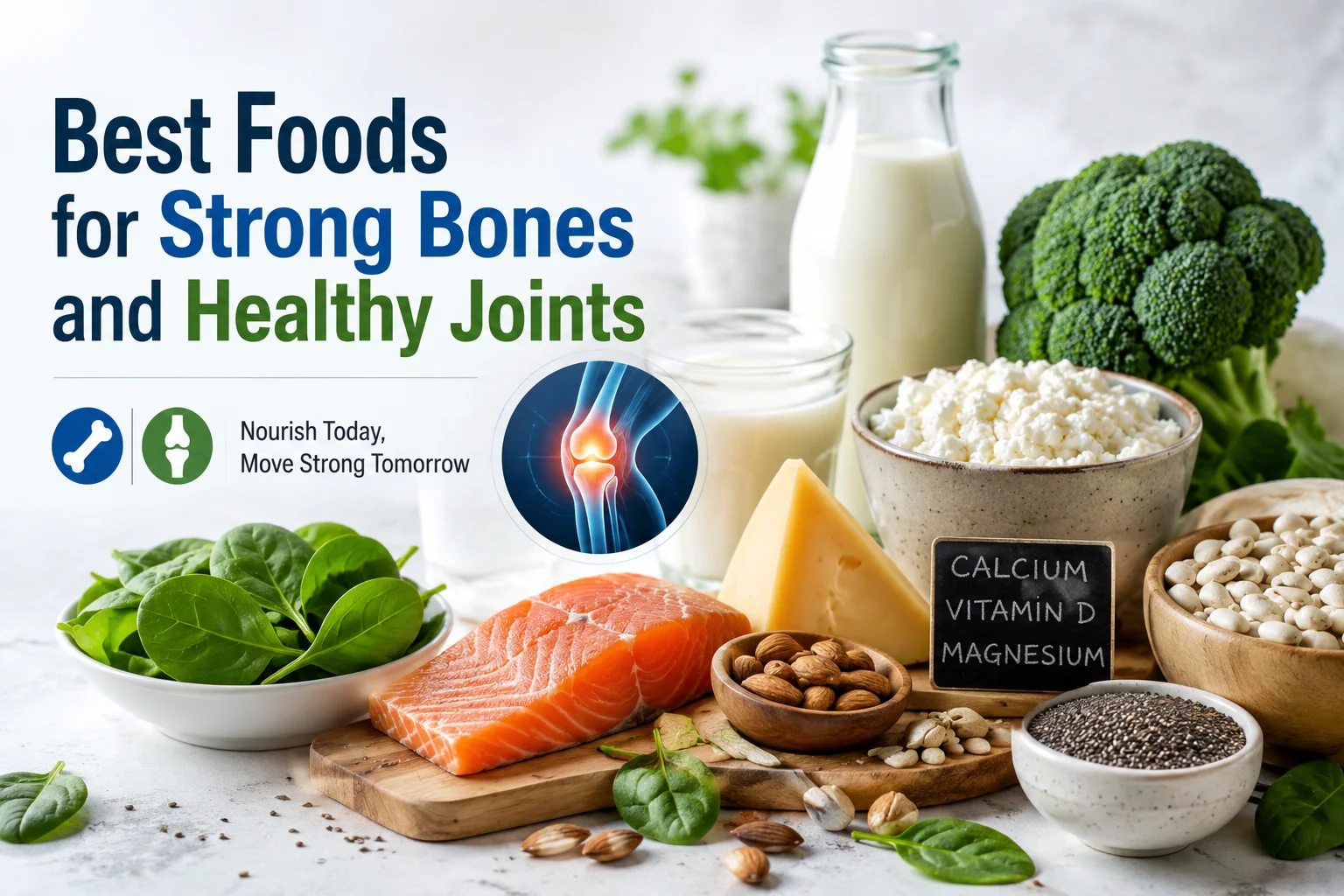
Your bones support your body, while your joints help you bend, walk, lift and move comfortably. What you eat plays a role in maintaining both, particularly as you grow older.
You do not need expensive supplements or special foods to support your bone health. Everyday choices such as milk or fortified alternatives, ragi, pulses, leafy vegetables, nuts, seeds, eggs and fish can help you build a balanced diet.
This guide explains which nutrients matter, where to find them in common Indian foods, and how to include them in everyday meals.
Medical note: Food supports bone health, but it cannot by itself cure arthritis, reverse advanced joint damage or replace treatment for osteoporosis.
What Nutrients Do Bones and Joints Need?
Bone is living tissue that continually renews itself. Joints also rely on several structures, including cartilage, ligaments, tendons and muscles. A balanced diet supplies nutrients needed to maintain these tissues and support normal movement.
- Calcium: helps build and maintain bones and teeth.
- Vitamin D: helps your body absorb calcium.
- Protein: supplies building blocks for bone, muscle and other tissues.
- Vitamin C: supports collagen formation, which is important for connective tissues and the bone framework.
- Magnesium and phosphorus: contribute to normal bone structure and function.
- Healthy fats: can be part of a balanced eating pattern that supports overall health.
No single nutrient or food provides everything you need. A varied diet is more useful than relying on one so-called superfood.
15 Foods for Strong Bones and Healthy Joints
Milk
Milk provides calcium and protein. Some products are also fortified with vitamin D, depending on the brand and location.
How to eat it: Have milk with breakfast, add it to porridge or use it in a balanced smoothie.
Curd and yoghurt
Curd provides protein and calcium. It can be a practical choice for people who tolerate dairy and want to include it in regular meals.
How to eat it: Pair plain curd with lunch, use it in raita or enjoy it as a snack.
Paneer
Paneer supplies protein and calcium, although the calcium content varies by preparation. It can help make vegetarian meals more substantial.
How to eat it: Add paneer to vegetable dishes, wraps or homemade curries.
Ragi (finger millet)
Ragi is a useful plant-based source of calcium. It is especially relevant in Indian diets, but the amount your body absorbs depends on several factors, including preparation.
How to eat it: Try ragi dosa, ragi roti, porridge or ragi mudde as part of a varied diet.
Sesame seeds
Sesame seeds contain calcium, healthy fats and other minerals. They can add nutrients and flavour to everyday meals.
How to eat it: Sprinkle a small amount over vegetables or include sesame chutney or podi with a meal.
Almonds
Almonds provide some calcium, magnesium, protein and unsaturated fats. They are a useful addition, though they should not be your only calcium source.
How to eat them: Have a small handful as a snack or add chopped almonds to oats or curd.
Beans and lentils
Dal, chickpeas, rajma and other pulses supply protein and minerals. Protein helps support muscles, which are important for movement and joint stability.
How to eat them: Include dal, sambar, chana or beans regularly, alongside vegetables and whole grains.
Calcium-set tofu and soy foods
Tofu can provide protein, and calcium-set varieties can be particularly rich in calcium. The amount depends on how the tofu is made.
How to eat it: Use tofu in stir-fries, curries or salads. Check the label for calcium information.
Green leafy vegetables
Some leafy vegetables provide calcium, vitamin K and other nutrients. Calcium absorption varies by vegetable; spinach, for example, contains compounds that limit calcium absorption.
How to eat them: Rotate suitable greens such as amaranth leaves and other local leafy vegetables in your meals.
Broccoli and cabbage
These vegetables supply vitamin C and other nutrients. Some also provide calcium, making them useful additions to a varied diet.
How to eat them: Add them to vegetable curries, lightly cooked side dishes or soups.
Eggs
Eggs provide protein and some vitamin D in the yolk. They are not a major calcium source, so combine them with other calcium-rich foods.
How to eat them: Try boiled eggs, an omelette with vegetables or eggs alongside whole-grain toast.
Oily fish
Fish such as sardines and salmon can supply protein and vitamin D. Sardines eaten with their soft bones can also provide calcium.
How to eat it: Choose fish preparations that fit your dietary preferences and health needs.
Calcium- and vitamin D-fortified foods
Some plant-based drinks, cereals and other products have calcium or vitamin D added. Fortification varies, so the nutrition label matters.
How to use them: Choose products with useful nutrient levels and compare added sugar where relevant.
Oranges, guava and other fruit
Fruit provides vitamin C, fibre and other nutrients. Vitamin C supports collagen formation, which contributes to the structure of bones and connective tissues.
How to eat them: Choose whole fruit regularly rather than relying on sweetened fruit drinks.
Whole grains and millets
Whole grains and millets contribute energy, fibre and a range of minerals. They help make meals balanced but should be combined with adequate protein and calcium sources.
How to eat them: Rotate whole-wheat roti, oats, millets and other grains according to your preferences.
Best Indian Foods for Calcium
If you are looking to increase calcium intake, you do not have to depend on milk alone. A combination of foods can help you meet your needs.
| Food | How to include it | What to check |
|---|---|---|
| Milk, curd and paneer | Breakfast, snacks or meals | Portion size and individual tolerance |
| Ragi | Dosa, porridge or roti | Include other nutrients as well |
| Sesame seeds | Chutney, podi or toppings | Use as part of a varied diet |
| Calcium-set tofu | Curries or stir-fries | Check the product label |
| Beans and leafy vegetables | Dal, sambar and vegetable dishes | Calcium content and absorption vary |
| Fish with edible bones | Suitable fish dishes | Calcium depends on whether the bones are eaten |
Foods That Provide Vitamin D
Vitamin D helps your body absorb calcium. Only a limited number of foods naturally contain substantial amounts, so fortified products may also be useful.
- Fatty fish such as salmon, sardines and mackerel.
- Egg yolks, which provide smaller amounts.
- Milk or plant-based drinks when fortified with vitamin D.
- Fortified cereals and other labelled products, depending on availability.
Sunlight helps the body make vitamin D, but the amount produced varies with skin tone, location, season, time outdoors and other factors. Do not rely on sun exposure alone if you may be deficient; a clinician can advise whether testing or supplementation is appropriate.
Sample One-Day Indian Meal Plan
This example shows how bone-supporting foods can fit into ordinary meals. It is not a personalised diet plan, and portion needs vary by age, health, activity and dietary requirements.
| Meal | Example | Nutrients to consider |
|---|---|---|
| Breakfast | Ragi dosa with sambar and curd | Calcium, protein and other minerals |
| Mid-morning | Guava or orange with a few almonds | Vitamin C, fibre and some minerals |
| Lunch | Roti or rice, dal, vegetables and curd | Protein, calcium and varied nutrients |
| Evening snack | Roasted chana or another suitable snack | Protein and minerals |
| Dinner | Vegetables with tofu or paneer and whole grains | Protein and a variety of nutrients |
If you eat fish or eggs, they can be included according to your preferences. If you avoid dairy, consider calcium-fortified foods, calcium-set tofu and other suitable sources.
Foods and Habits to Limit for Better Bone Health
You do not need to eliminate an entire food group to protect your bones. Focus on an overall pattern that supplies enough nutrients.
- Excessive alcohol: heavy drinking can harm bone health and increase the risk of falls.
- Smoking: smoking is associated with poorer bone health.
- Very restrictive diets: inadequate calorie, protein or nutrient intake can undermine general health and bone maintenance.
- Frequent nutrient-poor meals: relying heavily on foods high in added sugar or salt can make it harder to maintain a balanced diet.
There is no need to avoid all carbohydrates, all fats or all packaged foods. Overall diet quality, adequate nutrients and sustainable habits matter more than labelling individual foods as good or bad.
Do Supplements Make Bones Stronger?
Calcium or vitamin D supplements may be recommended when dietary intake is inadequate, a deficiency is identified or a health condition increases nutritional needs. However, more is not always better.
Supplements do not replace osteoporosis treatment when medication is needed, and they are not a cure for arthritis or damaged cartilage.
Other Ways to Support Strong Bones and Healthy Joints
- Do suitable weight-bearing activity: walking, dancing or other activities can support bone health when safe for your condition.
- Strengthen your muscles: appropriate resistance exercises help support movement and balance.
- Reduce fall risks: use suitable footwear, improve home lighting and address balance problems.
- Get enough sleep: consistent sleep supports general health and recovery.
- Follow medical advice: people with osteoporosis or ongoing joint problems may need specific treatment beyond dietary changes.
When Should You See a Doctor?
Arrange a medical appointment if joint pain or stiffness persists, swelling keeps returning, walking becomes difficult or your symptoms interfere with everyday activities.
Seek urgent medical care for sudden severe joint pain, a hot and swollen joint with fever, a major injury or an inability to bear weight. Do not assume these symptoms are simply caused by arthritis.
If you have risk factors for osteoporosis, have had a fracture after a minor fall, or notice unexplained loss of height, ask your clinician whether a bone-health assessment is appropriate.
Frequently Asked Questions
1. Which food is best for strong bones?
No single food is best for everyone. Milk, curd, calcium-set tofu, ragi, suitable leafy vegetables and fish with edible bones can contribute calcium. A varied diet that also provides vitamin D and protein is more useful than relying on one food.
2. Is ragi good for bone health?
Ragi is a useful plant-based source of calcium. Include it as part of a varied diet with protein and other nutrients. It cannot by itself prevent or treat osteoporosis.
3. Can food repair damaged joint cartilage?
No food has been shown to reliably rebuild damaged joint cartilage on its own. Good nutrition supports general health, but ongoing joint pain may require diagnosis, exercise therapy, medication or other treatment.
4. Are milk and dairy necessary for strong bones?
No. Dairy products are convenient sources of calcium and protein, but people who avoid dairy can use suitable alternatives such as calcium-fortified foods, calcium-set tofu and other calcium-containing foods.
5. Should everyone take calcium and vitamin D tablets?
No. Supplement needs depend on diet, age, health conditions, test results and medicines. Ask a clinician whether a supplement is appropriate instead of taking high doses on your own.
6. What is the difference between bone health and joint health?
Bones provide the body’s supporting framework, while joints allow bones to move relative to one another. Both benefit from good nutrition and suitable activity, but arthritis, osteoporosis and other conditions need different forms of assessment and treatment.
Related Health Guides
- 10 Early Signs of Arthritis You Shouldn’t Ignore
- Knee Pain: Causes, Symptoms and Treatment
- When Do You Need Knee Replacement Surgery?
- Osteoarthritis vs Rheumatoid Arthritis
Medical disclaimer: This article is for educational purposes and does not replace individual medical or nutritional advice. Nutrient requirements vary by age and health. Consult a qualified healthcare professional or registered dietitian for personalised guidance. Only describe this article as medically reviewed after a qualified clinician has reviewed it.


