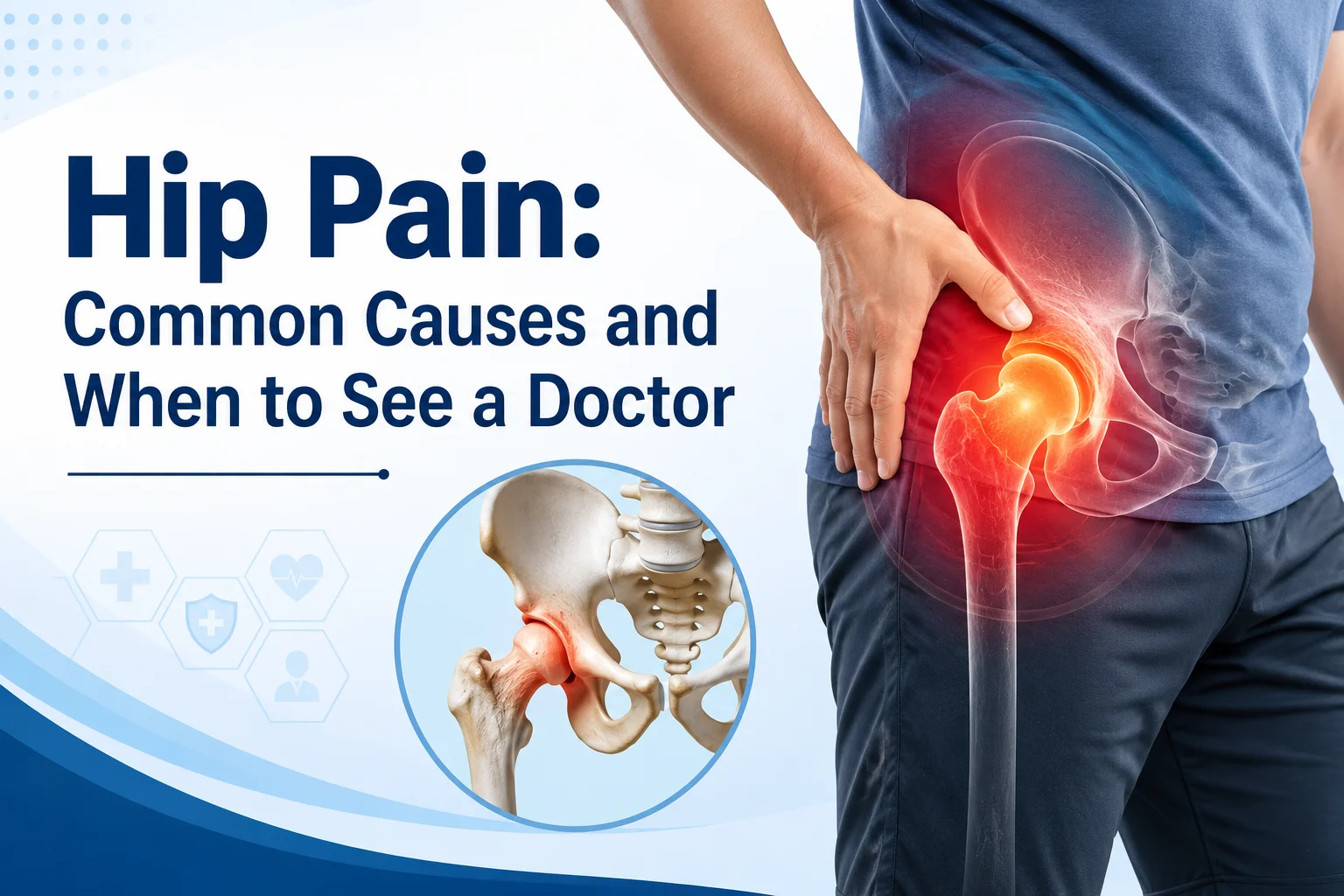
Hip Pain: Common Causes, Symptoms and Treatment
Hip pain can make everyday activities such as walking, climbing stairs, sitting for long periods, getting out of bed or putting on shoes uncomfortable. It may begin after exercise or an injury, or develop gradually over time. Some people feel pain deep in the groin, while others notice discomfort on the outside of the hip, in the buttock or down the thigh.
The right approach to hip pain depends on what is causing it. Muscle strain, tendon problems, bursitis, arthritis, fractures and pain referred from the lower back can produce similar symptoms. The location and pattern of pain can offer clues, but they cannot confirm a diagnosis on their own.
Quick answer: What should you know about hip pain?
- Groin pain may be related to the hip joint itself.
- Pain on the outside of the hip can involve nearby tendons or other soft tissues.
- Buttock pain may sometimes originate in the lower back.
- Persistent, worsening or sleep-disrupting pain should be assessed by a healthcare professional.
- Severe pain after an injury or an inability to stand or walk needs urgent medical assessment.
What Is Hip Pain?
The hip is a ball-and-socket joint where the upper end of the thigh bone (femur) meets the pelvis. Cartilage, muscles, tendons, ligaments and fluid-filled sacs around the joint help it move and support your body weight.
Because the hip plays an important role in standing, walking and movement, a problem in the joint or surrounding tissues can affect everyday mobility. Hip pain may be felt directly over the hip or in nearby areas, including the groin, upper thigh, buttock or even the knee.
Common Causes of Hip Pain
1. Muscle Strain or Overuse
A hip muscle strain happens when muscle fibres are overstretched or injured. It may occur after running, sports, lifting heavy objects, sudden twisting or increasing exercise too quickly. Repetitive movements can also irritate muscles and tendons around the hip.
You may notice pain when lifting your leg, changing direction, walking quickly or moving after sitting. Mild strains may improve with appropriate activity modification, but severe pain, significant bruising or difficulty walking should not be ignored.
2. Hip Osteoarthritis
Osteoarthritis is a condition in which the tissues within a joint gradually change, including the cartilage that helps the joint move smoothly. When the hip is affected, pain is often felt in the groin or front of the thigh. Stiffness and reduced movement can also occur.
Symptoms may become more noticeable during walking, climbing stairs, standing for long periods or getting up after sitting. Osteoarthritis is more common with increasing age, although age alone does not determine whether someone will develop it.
3. Bursitis and Tendon Problems
Bursae are small, fluid-filled sacs that reduce friction around joints. Irritation of these structures, along with problems affecting nearby tendons, can cause pain around the outer hip.
Discomfort may increase when lying on the affected side, walking, climbing stairs or standing up from a chair. Similar symptoms can arise from different soft-tissue conditions, so an examination may be needed to identify the cause.
4. Hip Fracture or Other Injury
A fall, road traffic accident, sports injury or other impact can damage the hip. A fracture is particularly important to consider in older adults and people with weakened bones. Significant hip injuries may cause sudden pain, swelling, bruising or difficulty moving the leg.
Do not try to walk through severe hip pain after a fall. Seek urgent medical care if you cannot put weight on the leg, cannot move the hip normally, or suspect a fracture. Avoid trying to force the joint into position.
5. Pain Referred From the Lower Back
Not all pain felt around the hip starts in the hip joint. Problems involving the lower back or irritated nerves may cause pain in the buttock, hip or leg. Some people also experience tingling, numbness or pain that travels down the leg.
If hip-area pain occurs with back pain or nerve-related symptoms, a clinician may need to assess both the hip and the spine to understand where the symptoms are coming from.
6. Inflammatory Conditions or Joint Infection
Some inflammatory conditions can cause joint pain and stiffness. A joint infection is less common but can be serious and requires prompt treatment. Warning signs can include sudden severe pain, a hot or swollen area, fever or feeling generally unwell.
Do not assume that a hot, swollen or severely painful hip is simply muscle soreness. Seek urgent medical assessment, particularly if fever or chills are also present.
Hip Pain by Location: What Could It Mean?
The location of your discomfort can help a clinician narrow down possible causes. However, several conditions can produce pain in the same area, so use the guide below as general information rather than a self-diagnosis tool.
| Where you feel pain | Possible explanations | What to notice |
|---|---|---|
| Front of the hip or groin | Hip joint problems, osteoarthritis, strain or other joint conditions | Pain with movement, stiffness or difficulty rotating the hip |
| Outside of the hip | Tendon irritation, bursitis or other soft-tissue problems | Pain when lying on that side, climbing stairs or walking |
| Buttock or back of the hip | Lower-back problems, referred pain or nearby muscle conditions | Back pain, tingling or symptoms travelling down the leg |
| Hip and upper thigh | Muscle strain, joint problems or referred pain | Whether the pain started after exercise or an injury |
| Hip pain after a fall | Possible fracture or other injury | Severe pain, swelling or difficulty standing or walking |
Important: This table is not a diagnostic tool. Pain location alone cannot reliably identify the underlying condition.
Why Does My Hip Hurt When Walking?
Hip pain while walking can develop for several reasons. Repeated movement may aggravate an irritated tendon or strained muscle. Joint conditions such as osteoarthritis may cause pain and stiffness when the hip bears weight. An injury can also make walking painful.
Pay attention to the pattern of your symptoms:
- Pain that begins after increasing exercise: may be related to overuse or a muscle or tendon problem.
- Pain with stiffness after rest: can occur with joint conditions, although it is not specific to one diagnosis.
- Pain that gets worse with weight-bearing: needs assessment if it persists, worsens or limits normal movement.
- Sudden severe pain or inability to walk: requires urgent medical assessment, particularly after an injury.
Do not force yourself to continue walking or exercising through significant pain. If the pain is new, severe or rapidly worsening, seek medical advice instead of starting a workout or stretching programme.
Why Does Hip Pain Get Worse at Night?
Hip pain at night may be related to pressure on the painful side, irritated soft tissues, joint conditions or other causes. Some people notice discomfort when turning in bed or after lying in one position for a long time.
If comfortable, try sleeping on the unaffected side and placing a pillow between your knees. Avoid positions that increase discomfort. Persistent night pain, pain that repeatedly wakes you or pain that is progressively worsening should be assessed by a healthcare professional rather than managed indefinitely at home.
How Is the Cause of Hip Pain Diagnosed?
Diagnosis usually begins with a medical history and physical examination. Your clinician may ask when the pain started, whether there was an injury, what movements make it worse and whether you have stiffness, fever, back pain, numbness or other symptoms.
The assessment may include the following:
- Movement assessment: checking hip movement, tenderness, walking and the ability to bear weight when safe.
- X-ray: may be used to assess certain fractures, joint changes and other bone-related problems.
- MRI or other imaging: may be recommended when a more detailed assessment of soft tissues, bone or joint structures is needed.
- Blood tests: may be considered if an infection or inflammatory condition is suspected.
- Additional assessment: may be needed when symptoms suggest a problem originating in the back or another area.
Not everyone needs imaging or blood tests. The appropriate tests depend on the symptoms, examination findings and suspected cause.
Hip Pain Treatment Options
There is no single treatment that works for every type of hip pain. Treatment is chosen according to the underlying cause, severity of symptoms, overall health and how much the pain affects daily life.
1. Activity Modification
For some mild, non-emergency problems, temporarily reducing activities that trigger pain may help. This could mean avoiding high-impact exercise, repeated deep bending or heavy lifting for a short time. Complete inactivity is not appropriate for every condition, so follow individual medical advice.
2. Medicines for Pain Relief
A healthcare professional or pharmacist can advise whether a pain reliever is suitable for you. Medicines such as paracetamol or anti-inflammatory drugs may help some people, but they are not safe for everyone. Suitability can depend on kidney or liver problems, stomach ulcers, heart conditions, pregnancy and other medicines.
Do not take more than the recommended dose or combine medicines without checking their ingredients and safety. Pain relief should not delay assessment of severe or unexplained symptoms.
3. Physiotherapy and Exercise
Depending on the diagnosis, a physiotherapist may recommend strengthening, mobility or flexibility exercises. A suitable programme can help improve function and support a gradual return to activities.
Exercise selection matters. An exercise that helps one condition may aggravate another. Stop an exercise that causes sharp or increasing pain and seek guidance if you are unsure what is safe.
4. Further Treatment or Surgery
Some conditions may require specialist treatment, injections, treatment for an underlying disease or surgery. For example, a significant fracture may need urgent orthopaedic treatment, while some people with advanced hip joint damage may be assessed for hip replacement if other suitable treatments have not helped.
Surgery is not necessary for most causes of hip pain. The decision depends on the diagnosis, the extent of damage, symptoms, general health and the expected benefits and risks of treatment.
Home Care Tips for Mild Hip Pain
If the pain is mild, there is no serious injury or warning sign, and you can move safely, the following measures may help while you monitor your symptoms.
- Modify painful activities: avoid movements that clearly aggravate the hip, and do not push through significant pain.
- Try a wrapped ice pack: apply it for up to 20 minutes at a time. Never place ice directly on the skin.
- Choose comfortable footwear: supportive, comfortable shoes may make walking easier.
- Change position regularly: avoid remaining in one position for long periods if this increases discomfort.
- Use comfortable sleeping positions: avoid direct pressure on the painful hip if it makes symptoms worse.
- Return to activity gradually: once symptoms improve, increase activity carefully and stop if pain worsens.
- Ask before starting exercises: get professional guidance if the pain is persistent, unexplained or associated with an injury.
Home care is not a substitute for medical assessment when symptoms are severe, worsening or associated with fever, swelling or difficulty bearing weight.
When Should You See a Doctor for Hip Pain?
Seek urgent medical attention if you have:
- Severe hip pain after a fall, accident or other injury.
- An inability to walk or put weight on the affected leg.
- A hip or leg that looks deformed after an injury.
- Sudden, intense or rapidly worsening hip pain.
- A hot or swollen hip, especially with fever, chills or feeling unwell.
- New loss of sensation or tingling following a hip injury.
These symptoms may indicate a serious problem. Seek emergency care when appropriate; do not wait for home treatment to work.
Arrange a medical appointment if your hip pain is getting worse, repeatedly returning, affecting sleep or normal activities, or has not improved after about two weeks of appropriate home care. Also seek advice for ongoing stiffness, reduced movement or pain without a clear explanation.
People with osteoporosis, a history of significant injury or other conditions that increase the risk of complications may need earlier assessment. Children and teenagers with hip pain should also be assessed appropriately, particularly if walking becomes difficult.
How Can You Help Reduce the Risk of Hip Pain?
Not all hip conditions can be prevented, but some everyday habits may reduce avoidable strain and support mobility.
- Warm up before sport or strenuous exercise.
- Increase exercise intensity and distance gradually.
- Include appropriate strength and mobility work in your routine.
- Use correct technique when lifting heavy objects.
- Wear footwear that is comfortable and suitable for your activity.
- Allow recovery time between demanding workouts.
- Discuss recurring pain with a healthcare professional instead of repeatedly ignoring it.
- Take steps to reduce falls at home, particularly if balance or mobility is a concern.
If you already have a diagnosed hip condition, ask your clinician which activities are suitable for you. A tailored plan is generally more useful than following a generic exercise routine.
Frequently Asked Questions About Hip Pain
1. What is the most common cause of hip pain?
Hip pain has many possible causes, including muscle strain, tendon problems, bursitis, osteoarthritis and injuries. The most likely cause depends on your age, medical history, pain location, how symptoms began and examination findings.
2. Can hip pain go away on its own?
Some mild muscle strains and overuse-related problems improve with appropriate activity modification and time. Other causes may need specific treatment. Seek medical advice if pain worsens, limits normal activity or does not improve.
3. Why does my hip hurt when I walk?
Pain during walking can be associated with joint conditions, muscle or tendon problems, injuries or referred pain. Sudden severe pain or an inability to bear weight needs urgent assessment.
4. Is hip pain a sign of arthritis?
It can be, but hip pain alone does not confirm arthritis. Osteoarthritis may cause groin or thigh pain, stiffness and difficulty moving the hip. A clinician can assess your symptoms and decide whether tests are needed.
5. Should I use ice or heat for hip pain?
A wrapped ice pack may help some recent, mild injuries or painful areas. Gentle warmth may help some people with muscle stiffness. Avoid extreme temperatures and stop if symptoms worsen. Neither method should delay care for severe or unexplained pain.
6. Which doctor should I consult for hip pain?
A primary care doctor can assess many causes of hip pain and guide further care. Depending on the symptoms, you may be referred to an orthopaedic specialist, physiotherapist, rheumatologist or another appropriate clinician. Severe symptoms or warning signs require urgent assessment.
7. When is hip pain an emergency?
Seek urgent medical attention for severe pain after an injury, inability to stand or walk on the affected leg, sudden intense pain, or a hot and swollen hip with fever or feeling unwell.
Key Takeaway
Hip pain can result from problems involving the joint, muscles, tendons, surrounding tissues or lower back. The location of pain and the activities that trigger it can provide useful clues, but an examination may be necessary to determine the actual cause.
For mild symptoms without warning signs, modifying painful activities and using appropriate home care may help. Do not ignore pain that persists, worsens or affects your ability to sleep or move. Severe pain after an injury, inability to bear weight or symptoms suggesting infection need urgent medical attention.
Medical disclaimer: This content is for general educational purposes only and is not a substitute for professional medical advice, diagnosis or treatment. Symptoms and appropriate treatment vary from person to person. Consult a qualified healthcare professional about your individual situation. Seek emergency care for serious warning signs.


