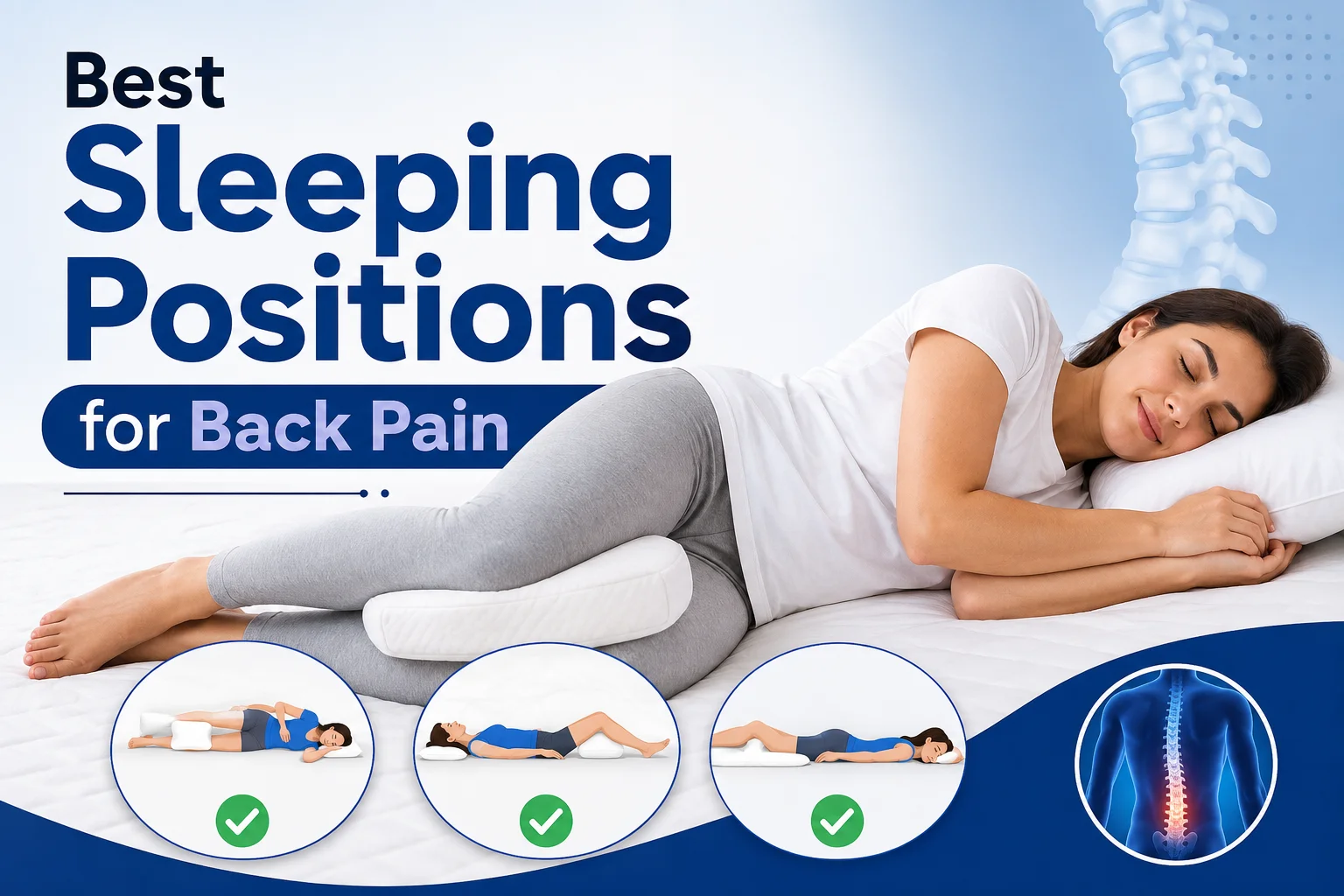
Do you wake up with back pain every morning? Does your lower back hurt when you lie down, turn over in bed, or try to get comfortable at night?
Back pain can make it difficult to get a good night’s sleep. You may keep changing positions, adding pillows, or waking up because your back feels uncomfortable. Poor sleep can also make it harder to manage pain during the day.
The good news is that a few simple changes to your sleeping position may help reduce pressure on your back and make resting more comfortable.
Which sleeping position should you try?
For many people with back pain, sleeping on the side with a pillow between the knees or on the back with a pillow under the knees can help. The most comfortable position depends on your symptoms and how your body responds.
In this guide, we explain the best sleeping positions for back pain, how to use pillows correctly, which positions may aggravate discomfort, and when you should see a doctor.
Best Sleeping Positions for Back Pain
There is no single sleeping position that works for everyone. The aim is to find a position that feels comfortable and supports your spine without putting unnecessary strain on your back.
1. Sleep on Your Side With a Pillow Between Your Knees
Sleeping on your side is a useful option for many people who experience lower back pain.
When your upper leg falls forward while you sleep, your hips and lower back may twist. Placing a pillow between your knees can help keep your hips in a more comfortable position.
How to position yourself:
- Lie on your side with your head resting on a comfortable pillow.
- Bend your knees slightly rather than pulling them tightly towards your chest.
- Place a pillow between your knees so your upper leg is supported.
- Keep your shoulders, hips, and legs comfortably aligned.
- Adjust your head pillow so your neck does not bend sharply to either side.
A full-length body pillow may help if you tend to roll forward while sleeping.
This position may suit people who feel more comfortable on their side. If one side causes more pain, try the other side instead.
2. Sleep on Your Back With a Pillow Under Your Knees
If you prefer sleeping on your back, a pillow under your knees may help you feel more comfortable.
Supporting your knees slightly bends your hips and knees, which may reduce tension in the lower back for some people.
How to position yourself:
- Lie on your back in a comfortable position.
- Place a pillow under both knees.
- Adjust the pillow height until your lower back feels relaxed.
- Use a head pillow that keeps your neck comfortably aligned with your body.
- Change the support if it creates pressure or discomfort.
You do not need to force yourself to remain on your back throughout the night. If lying flat increases your pain, try another position.
3. Sleep on Your Stomach With Extra Support
Sleeping on your stomach can be less comfortable for people with back pain because it may increase the arch in the lower back. Turning your head to one side for long periods may also strain your neck.
However, some people naturally prefer this position and find it difficult to sleep any other way.
If you prefer sleeping on your stomach:
- Try a thin pillow under your lower abdomen or pelvis.
- Use a thin head pillow, or none if comfortable.
- Avoid twisting your body while lying down.
- Try side or back sleeping if those positions feel better.
If stomach sleeping consistently increases your pain, consider changing positions rather than trying to tolerate the discomfort.
Which Sleeping Position Is Best for You?
Use this simple comparison to decide which position to try first.
| Sleeping position | How it may help | Pillow support |
|---|---|---|
| Side sleeping | May help keep the hips and lower back comfortably aligned. | Pillow between the knees. |
| Back sleeping | May reduce tension in the lower back for some people. | Pillow under the knees. |
| Stomach sleeping | May be an option if other positions feel uncomfortable. | Thin pillow under the lower abdomen or pelvis. |
These positions are starting points, not guaranteed treatments. If a position increases your pain, change it.
Why Does Your Back Hurt More at Night?
Back pain at night can have several causes. Your sleeping position may contribute, but it is not always the main reason.
1. Muscle Strain
Muscles in your back can become sore after lifting heavy objects, exercising, bending repeatedly, or sitting for long periods. You may notice discomfort when turning over in bed or getting up in the morning.
2. Prolonged Sitting During the Day
If you spend many hours sitting at a desk or working on a computer, your back may feel stiff when you lie down. Taking regular movement breaks during the day and gradually returning to comfortable activity may help.
3. An Unsupportive Mattress or Pillow
A mattress that sags or a pillow that keeps your neck at an uncomfortable angle may make it harder to find a comfortable sleeping position.
There is no single mattress firmness that is best for everyone. Choose a mattress that feels supportive and comfortable for your body.
4. Disc or Nerve Problems
Conditions affecting the spinal discs or nearby nerves can cause back pain. Some people also experience pain that travels into the buttock or leg, tingling, numbness, or weakness.
Persistent or worsening symptoms should be assessed by a healthcare professional.
5. Other Medical Conditions
Back pain can sometimes be related to inflammatory conditions, fractures, infections, or problems involving internal organs.
Pain that repeatedly wakes you at night or occurs with other unusual symptoms should not automatically be blamed on your mattress or sleeping position.
How to Use Pillows to Reduce Back Discomfort
You do not necessarily need special pillows or expensive sleep products. Ordinary pillows can often provide useful support.
Choose the Right Head Pillow
- If you sleep on your side: Choose a pillow that fills the space between your head and shoulder without tilting your neck.
- If you sleep on your back: Choose a pillow that supports your neck without pushing your head too far forward.
- If you sleep on your stomach: A thin pillow may be more comfortable.
Support Your Knees
A pillow between your knees can help prevent your upper leg from pulling forward while you sleep on your side.
If you sleep on your back, placing a pillow under your knees may help reduce tension in your lower back.
Avoid Forcing Your Body Into Position
You do not need to keep your spine perfectly still throughout the night. People naturally move while sleeping.
Focus on finding a comfortable starting position and allowing yourself to change positions when needed.
Can Your Mattress Cause Back Pain?
Your mattress can affect how comfortable you feel while sleeping, particularly if it sags or no longer supports your body well.
However, back pain does not automatically mean you need to buy a new mattress.
Before replacing it, consider the following:
- Does the mattress sag noticeably?
- Do you feel uncomfortable pressure when lying on it?
- Does your back feel better when sleeping on a different suitable surface?
- Does changing your pillow or sleeping position improve your comfort?
A supportive, comfortable mattress is generally more useful than choosing one based only on a marketing label such as soft, firm, or orthopaedic.
If you are considering a replacement, try the mattress when possible and choose one that feels comfortable in your usual sleeping position.
How to Get Out of Bed Without Aggravating Back Pain
The first few movements in the morning can feel difficult when your back is stiff. Try getting out of bed slowly rather than sitting straight up from a lying position.
- Bend your knees slightly if comfortable.
- Roll onto your side while keeping your movements controlled.
- Move your legs towards the edge of the bed.
- Use your arms to help push your upper body into a sitting position.
- Pause briefly before standing up.
Do not force this technique if it causes sharp pain or if you have been advised to follow specific movement restrictions after an injury or surgery.
If your back pain repeatedly makes it difficult to get out of bed, seek medical advice.
What Else Can Help You Sleep Better With Back Pain?
Stay Gently Active
For many common types of back pain, continuing comfortable daily activities is preferable to prolonged bed rest. Short walks and gentle movement may help reduce stiffness.
Take Breaks From Sitting
If you work at a desk, stand up and move around regularly. Adjust your chair and workstation so you can work comfortably.
Try Gentle Relaxation Before Bed
A warm shower, a calm bedtime routine, or gentle movement may help you relax before sleeping. Avoid stretches that trigger sharp pain or symptoms travelling down your leg.
Maintain a Regular Sleep Routine
Try to keep a consistent bedtime and wake-up time. A comfortable, quiet sleeping environment may help you get more restful sleep.
Seek Advice About Pain Relief
Some medicines may help with back pain, but they are not suitable for everyone. Ask a doctor or pharmacist which options are appropriate for your health and any other medicines you take.
When Should You See a Doctor for Back Pain?
Many cases of back pain improve with time and appropriate self-care. However, certain symptoms need medical attention.
Arrange a medical appointment if:
- Your pain does not improve after a few weeks.
- The pain keeps returning or interferes with your sleep.
- The pain is getting worse rather than improving.
- Pain travels down your leg, especially with persistent tingling or numbness.
- You have unexplained weight loss or other unusual symptoms.
- You have a history of cancer, osteoporosis, or a condition that increases your risk of infection.
Seek emergency medical care if back pain occurs with new difficulty passing urine, loss of bladder or bowel control, numbness around the genitals or buttocks, or new or rapidly worsening weakness in the legs.
These symptoms may indicate a serious problem involving the nerves or spine.
Back pain accompanied by fever or feeling very unwell also needs prompt medical assessment, particularly if the pain is severe or worsening.
Frequently Asked Questions
1. What is the best sleeping position for lower back pain?
Side sleeping with a pillow between the knees and back sleeping with a pillow under the knees are useful positions to try. The best option depends on your symptoms and which position feels comfortable.
2. Is it better to sleep on your back or side for back pain?
Both positions may help. Sleeping on your back with a pillow under your knees can reduce tension for some people, while side sleeping with a pillow between the knees may help keep the hips aligned. Choose the position that feels better for you.
3. Is sleeping on your stomach bad for back pain?
Stomach sleeping can increase the arch in your lower back and keep your neck turned to one side. If you cannot comfortably change positions, try a thin pillow under your lower abdomen and avoid positions that worsen your pain.
4. Why does my lower back hurt when I wake up?
Morning back pain may be related to muscle stiffness, prolonged positioning, an uncomfortable sleeping surface, or an underlying medical condition. If it happens regularly or continues to worsen, consult a healthcare professional.
5. Should I use a pillow under my knees while sleeping?
If you sleep on your back, a pillow under your knees may make your lower back feel more comfortable. If you sleep on your side, a pillow between your knees may help support your hips.
6. Can the wrong mattress cause back pain?
A mattress that sags or feels uncomfortable may contribute to poor sleep and back discomfort. However, back pain has many possible causes, and replacing your mattress will not necessarily solve the problem.
7. When should I worry about back pain at night?
Seek medical advice if your pain repeatedly wakes you, persists, or becomes worse. Back pain with new bladder or bowel problems, numbness around the groin, or rapidly worsening leg weakness requires emergency assessment.
Conclusion
Back pain can make it difficult to relax and get a good night’s sleep. Small adjustments to your sleeping position and pillow support may help some people feel more comfortable.
Try sleeping on your side with a pillow between your knees or on your back with a pillow under your knees. If you prefer sleeping on your stomach, consider placing a thin pillow under your lower abdomen.
Remember that no sleeping position can guarantee relief from back pain. Pay attention to what feels comfortable, avoid positions that make the pain worse, and seek medical advice if your symptoms persist or interfere with everyday life.
Medical disclaimer: This article is for general educational purposes only. It does not replace professional medical advice, diagnosis, or treatment. Consult a qualified healthcare professional about persistent or severe back pain.


