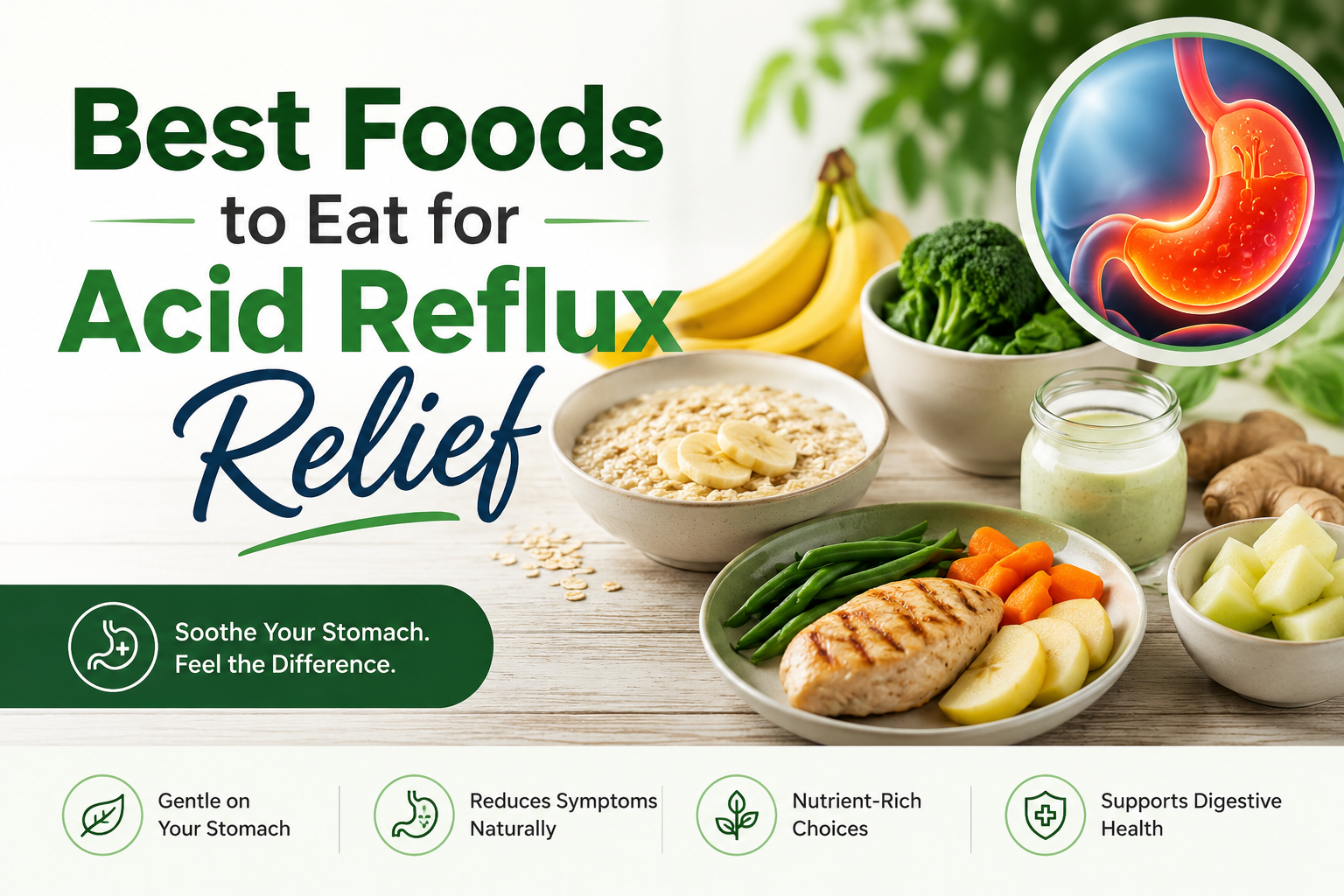
That burning feeling in your chest after a meal can make even your favourite foods difficult to enjoy. The good news is that changing meal sizes, identifying your personal food triggers and making a few daily adjustments may help manage acid reflux.
Acid reflux happens when stomach contents flow back into the oesophagus, the tube that carries food from your mouth to your stomach. It can cause heartburn, a sour taste in the mouth or discomfort after eating. When reflux happens frequently or causes complications, it may be called gastro-oesophageal reflux disease (GERD or GORD).
There is no single diet that works for everyone with acid reflux. Some people notice symptoms after coffee, spicy foods or rich meals, while others tolerate these foods without a problem. The aim is to choose balanced meals and identify the triggers that affect you.
Eat smaller meals, avoid lying down for around three hours after eating, and keep a note of foods that seem to trigger your symptoms. These changes may help reduce reflux for some people.
8 Foods That May Fit a Reflux-Friendly Diet
These foods can be useful options for many people. Tolerance varies, so introduce them according to your preferences and notice how your body responds.
Oatmeal
Oats provide fibre and make a filling breakfast. A simple preparation without a lot of added fat may be easier to manage than a large, rich breakfast.
Bananas
Bananas are convenient and provide fibre and other nutrients. They are a non-citrus fruit option that some people find easy to include in their meals.
Green Vegetables
Vegetables such as beans, spinach, bottle gourd and broccoli provide fibre and nutrients. Lightly cooked vegetables may be a practical choice if very rich meals worsen your symptoms.
Rice and Other Grains
Rice, oats and other grains can provide energy as part of balanced meals. The portion and accompanying ingredients matter, especially when large meals trigger symptoms.
Lean Protein
Skinless chicken, fish, eggs, tofu and pulses can provide protein. Preparation methods that use less added fat may be preferable if rich or fried meals trigger your reflux.
Non-Citrus Fruits
Pears, melons and other non-citrus fruits may suit people who find oranges or other acidic fruits trigger symptoms. Individual tolerance still matters.
Lower-Fat Dairy or Alternatives
If you tolerate dairy, lower-fat milk or plain yoghurt may fit your diet. Some people find high-fat dairy products worsen symptoms, while others do not.
Water
Water supports hydration and can be a useful alternative to fizzy drinks, which some people find aggravate reflux. Drinking excessive amounts at once may feel uncomfortable.
Foods and Drinks That May Trigger Acid Reflux
Certain foods and drinks are commonly linked with reflux symptoms, but you do not need to eliminate every item on this list if it does not affect you. Focus on your own symptom pattern.
| Possible trigger | What you can try |
|---|---|
| Very spicy foods | Reduce chilli or strong spices if they cause burning. |
| Fried and high-fat meals | Try smaller portions and less oily cooking methods. |
| Coffee and other caffeine sources | Track whether your symptoms change when you reduce them. |
| Tomatoes and citrus fruits | Reduce them if acidic foods seem to trigger symptoms. |
| Chocolate and mint | Check whether symptoms occur after eating these foods. |
| Alcohol and fizzy drinks | Limit or avoid them if they worsen your symptoms. |
Acid reflux triggers differ between people. A food diary can help you identify patterns without cutting out many nutritious foods unnecessarily. If your diet is becoming very limited, speak with a healthcare professional or registered dietitian.
6 Everyday Habits That May Help Reduce Reflux
1. Eat Smaller Meals
Large meals may increase pressure in the stomach. Try smaller portions and eat at a comfortable pace.
2. Avoid Lying Down After Eating
Leave around three hours between your last meal and lying down or going to bed if night-time reflux is a problem.
3. Raise the Head of Your Bed
For night-time symptoms, elevating the head of the bed with a suitable wedge or bed risers may help. Extra pillows alone may not provide the same effect.
4. Notice Your Triggers
Record meals, portion sizes and symptoms. Look for repeated patterns rather than blaming one food after a single episode.
5. Consider Weight Management if Appropriate
If you are overweight, gradual weight loss may reduce reflux symptoms. A healthcare professional can help you choose a suitable approach.
6. Avoid Smoking
Smoking can worsen reflux. Support is available if you want help stopping.
A Simple Meal Plan for People with Acid Reflux
This is an example, not a medical prescription. Choose foods you tolerate and adjust the portions to your appetite and needs.
| Meal | Example | Practical tip |
|---|---|---|
| Breakfast | Oatmeal with banana | Keep the portion comfortable and avoid excessive added sugar. |
| Lunch | Rice or roti, cooked vegetables and dal | Use moderate portions and limit oil if fatty meals trigger symptoms. |
| Snack | Pear, melon or another tolerated fruit | Choose a fruit that does not worsen your symptoms. |
| Dinner | Vegetables with tofu, fish, eggs or another suitable protein | Eat early enough to avoid lying down soon after dinner. |
When Should You See a Doctor?
Occasional heartburn is common, but frequent or persistent symptoms may need medical assessment. Speak with a healthcare professional if you experience heartburn most days, symptoms that do not improve, repeated vomiting, difficulty swallowing or unexplained weight loss.
New or severe chest pain, particularly with breathlessness, sweating, dizziness or pain spreading to the arm, jaw or back, could be a heart emergency. Do not assume that chest pain is acid reflux. Seek emergency help.
A clinician may recommend lifestyle changes, medicines or tests depending on your symptoms. Do not stop prescribed medicines or use acid-reducing medicines regularly for prolonged periods without appropriate advice.
Frequently Asked Questions
1. What is the best food for acid reflux?
There is no single best food for everyone. Oatmeal, vegetables, non-citrus fruits and lean protein may fit into a balanced diet. Your own triggers and portion sizes matter.
2. Are bananas good for acid reflux?
Bananas are a non-citrus fruit that some people tolerate well. They are not a guaranteed treatment, so notice how your symptoms respond after eating them.
3. Should I avoid spicy food completely?
Only if it triggers or worsens your symptoms. Some people with reflux tolerate spicy foods, while others find that reducing chilli helps.
4. Does drinking water stop acid reflux?
Water helps with hydration, but it does not reliably stop reflux. Avoiding personal triggers, eating smaller meals and not lying down soon after eating may help manage symptoms.
5. Is milk good for heartburn?
The effect varies. Higher-fat milk may worsen symptoms for some people, while lower-fat options may be better tolerated. Milk should not be used as a replacement for appropriate treatment.
6. How long before bed should I stop eating?
If you experience night-time reflux, leaving around three hours between eating and lying down may help reduce symptoms.
Related Health Guides
Learn more about related digestive and general health topics:
Find What Works for Your Body
Managing acid reflux often starts with small, consistent changes. Choose balanced meals, pay attention to your personal triggers and give yourself time between dinner and bedtime. If symptoms persist or affect daily life, get medical advice rather than relying on diet changes alone.
Medical disclaimer: This article is for general educational purposes and is not a substitute for professional medical advice, diagnosis or treatment. Consult a qualified healthcare professional for advice about persistent symptoms or an individual treatment plan.


