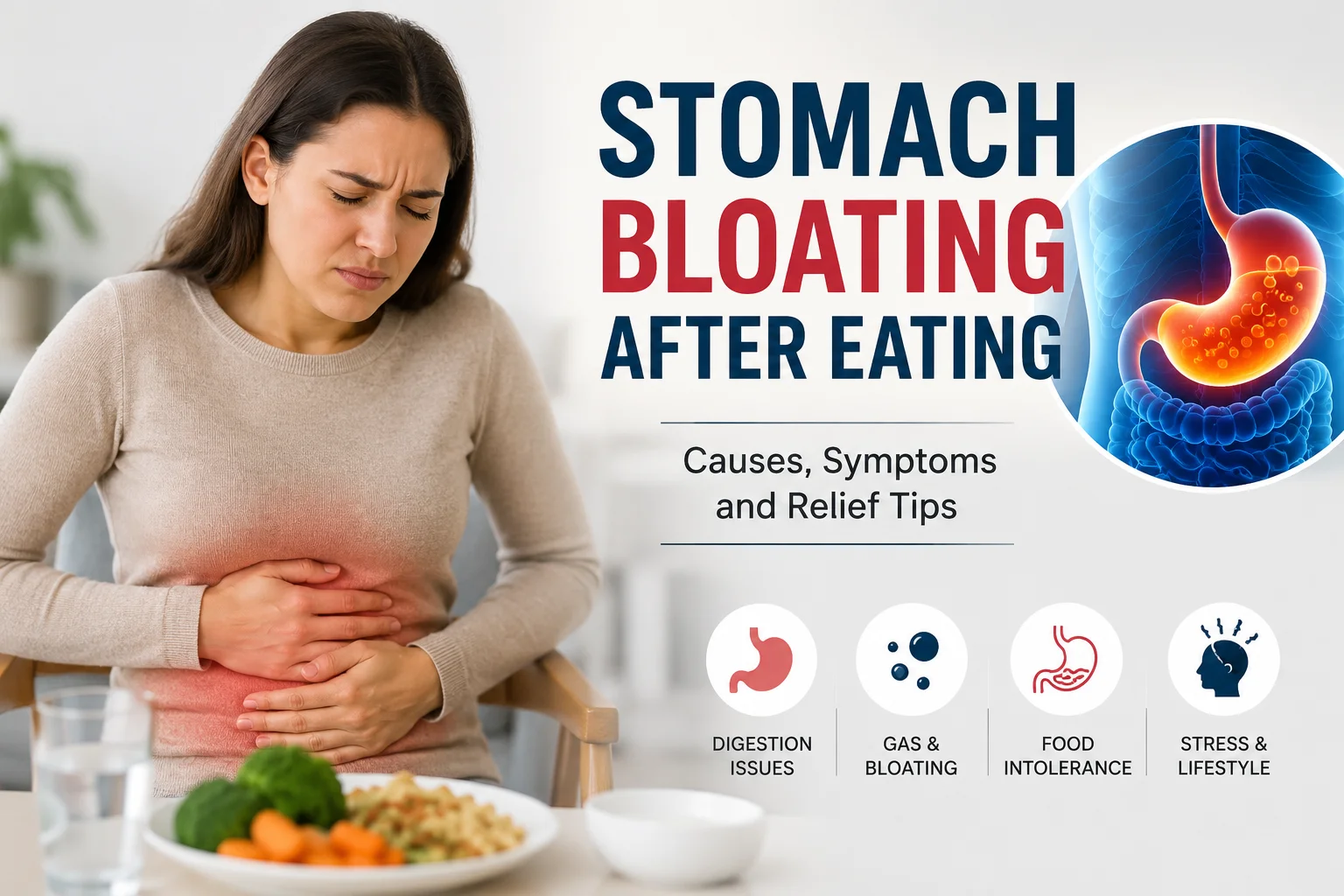
Have you ever finished a meal and noticed that your stomach feels unusually full, tight or swollen? Bloating after eating is common, and it can happen even when you have not eaten a large meal. Sometimes the reason is as simple as eating too quickly. In other cases, constipation, food intolerance or a digestive condition may be responsible.
The good news is that a few practical changes can help many people feel more comfortable after meals. The first step is to understand when the bloating happens, which foods or habits may trigger it, and whether you have other symptoms.
This guide explains the common causes of stomach bloating after eating, home-care measures that may help, available treatment options and the warning signs that should not be ignored.
What Does Stomach Bloating Feel Like?
Bloating is the feeling of fullness, pressure or swelling in your abdomen. Your stomach may feel tight, your clothes may seem uncomfortable around the waist, or you may notice more burping or passing gas than usual.
Some people feel bloated without any visible change in their abdomen. Others experience abdominal distension, which means the abdomen actually becomes larger than usual.
Occasional bloating can be part of normal digestion. However, if it happens after most meals, keeps returning or affects your daily routine, it is worth looking into the cause.
What Causes Stomach Bloating After Eating?
1. Eating Too Quickly
When you eat in a hurry, you may swallow more air than usual. That extra air can contribute to burping, pressure and discomfort. Eating quickly may also make it easier to eat beyond the point of comfortable fullness.
What may help:
- Sit down for meals instead of eating while rushing around.
- Take smaller bites and chew your food thoroughly.
- Put your spoon or fork down between mouthfuls.
- Try to avoid talking continuously while chewing.
2. Large Meals
A large meal can leave you feeling overly full, especially if you eat quickly or have gone a long time without food. High-fat meals can also contribute to digestive discomfort in some people.
Instead of skipping meals and then eating a large portion, try regular meals with portions that feel comfortable. If you get full very quickly despite eating small amounts, arrange a medical assessment.
3. Fizzy Drinks
Carbonated drinks contain gas that can increase burping and contribute to a bloated feeling. Some people notice symptoms after drinking soda, sparkling water or other fizzy beverages.
Try replacing fizzy drinks with plain water for a while and see whether your symptoms improve. You do not need to remove foods or drinks permanently unless you notice a consistent connection or your clinician recommends it.
4. Foods That Produce Gas
Bacteria in the large intestine break down some carbohydrates that are not fully digested earlier in the digestive tract. This process naturally produces gas.
Foods that may trigger more gas in some people include:
- Beans, chickpeas, lentils and other pulses.
- Cabbage, cauliflower and broccoli.
- Onions and some other vegetables.
- Milk and dairy products in people who have difficulty digesting lactose.
- Some fruits, fruit juices and products containing certain sweeteners.
These foods are nutritious and do not need to be avoided by everyone. Pay attention to your own symptoms, and try changing one possible trigger at a time rather than cutting out many food groups together.
5. Food Intolerance
If bloating regularly follows a particular food, your body may have difficulty digesting one of its components. Lactose intolerance, for example, can cause bloating, gas, abdominal discomfort and diarrhoea after consuming milk or other foods containing lactose.
Other carbohydrate sensitivities can produce similar symptoms. A food and symptom diary can help identify patterns, but it cannot confirm a diagnosis on its own.
Speak with a healthcare professional before starting a restrictive diet. If a food intolerance is suspected, they can help determine whether testing or a supervised dietary trial is appropriate.
6. Constipation
When stools move slowly through the bowel or become difficult to pass, gas and abdominal discomfort can build up. You may also notice hard stools, straining or the feeling that your bowel has not emptied completely.
If constipation is contributing to bloating, drinking enough water, staying active and gradually increasing fibre may help. Oats, fruit and vegetables are useful sources of fibre. Increase fibre gradually because a sudden increase can temporarily make gas worse.
If constipation continues despite these changes, ask a healthcare professional or pharmacist about suitable treatment.
7. Indigestion and Acid Reflux
Indigestion can cause upper abdominal discomfort, early fullness, nausea, burping and bloating after meals. Some people also experience heartburn or a sour taste when stomach contents move back towards the throat.
Eating smaller meals and avoiding lying down soon after eating may help some people. If heartburn is part of your symptoms, read our guide to foods that may help with acid reflux.
Persistent indigestion, difficulty swallowing or repeated vomiting should not be managed through diet changes alone. Arrange medical advice to identify the cause.
8. Irritable Bowel Syndrome (IBS)
Irritable bowel syndrome is a digestive condition that can cause recurring abdominal pain, bloating, constipation, diarrhoea or alternating bowel habits. Symptoms may change from day to day and can sometimes be associated with meals.
Treatment may include changes to eating habits, support for bowel symptoms, physical activity and stress management. Some people benefit from a dietitian-guided low-FODMAP diet, but this approach is not suitable for everyone and should not become an unnecessarily restrictive long-term diet.
If bloating occurs frequently alongside abdominal pain or changes in bowel habits, consult a healthcare professional rather than assuming that you have IBS.
9. Hormonal Changes
Some people notice bloating around the time of their menstrual period. Hormonal changes may affect fluid retention and bowel habits, which can contribute to a temporary feeling of fullness.
Keeping track of your menstrual cycle and symptoms may help you notice a pattern. However, persistent or worsening bloating, particularly with pelvic pain, unusual bleeding or feeling full very quickly, should be assessed by a clinician.
Foods and Eating Habits: What Should You Track?
There is no single bloating diet that works for everyone. A food diary can help you work out whether certain meals, portion sizes or eating habits are associated with your symptoms.
| Possible trigger | What you might notice | Practical step |
|---|---|---|
| Eating quickly | Burping or fullness soon after meals | Slow down and chew thoroughly. |
| Fizzy drinks | Burping or pressure after drinking | Try still water instead. |
| Milk products | Gas, bloating or diarrhoea after dairy | Discuss possible lactose intolerance with a clinician. |
| Beans or certain vegetables | More gas after particular meals | Adjust portions and introduce fibre gradually. |
| Constipation | Bloating with hard or infrequent stools | Review fluid intake, fibre and activity. |
| Large or high-fat meals | Uncomfortable fullness after eating | Try smaller portions and observe the response. |
Record what you ate, the approximate portion, when symptoms started and how long they lasted. Also note any constipation, diarrhoea, medicines or menstrual changes.
How to Reduce Bloating After Eating
Eat Slowly and Choose Comfortable Portions
Give yourself enough time to eat. Smaller, more frequent meals may suit some people better than a few very large meals. Stop when you feel comfortably full rather than forcing yourself to finish everything on your plate.
Drink Water Regularly
Adequate fluid intake supports normal digestion and can be especially helpful if you are constipated. Plain water is a practical choice. Your fluid needs may differ if you have a condition that requires fluid restriction, so follow your clinician’s advice in that situation.
Take a Gentle Walk
A gentle walk after eating may help you stay active and support normal bowel movement. Start with a comfortable pace rather than intense exercise immediately after a large meal.
Adjust Fibre Gradually
Fibre supports bowel health, but suddenly adding large amounts of bran, beans or other high-fibre foods may temporarily increase gas. Increase fibre gradually and drink adequate fluids. If you have persistent symptoms, ask whether a particular type or amount of fibre is appropriate for you.
Limit Triggers You Have Identified
If a particular drink or food consistently brings on symptoms, try reducing it temporarily and observe whether you improve. Avoid eliminating multiple nutritious food groups without guidance, especially if your diet is already limited.
Review Medicines and Supplements
Some medicines and supplements can affect digestion or cause constipation. If your symptoms started after beginning a new product, ask your doctor or pharmacist whether it could be contributing. Do not stop prescribed medication on your own.
What Treatment Is Available for Stomach Bloating?
Treatment depends on the reason for the bloating. Occasional symptoms may improve with changes in eating habits, while persistent symptoms may need medical evaluation.
- For constipation: A clinician or pharmacist may recommend appropriate dietary changes or a laxative when suitable.
- For lactose intolerance: Adjusting lactose intake or using a suitable lactase product may help some people.
- For indigestion or reflux: Treatment depends on the symptoms and underlying cause; a clinician or pharmacist can advise on suitable medicines.
- For IBS: Management may involve tailored dietary changes, symptom-specific medicines and other supportive strategies.
- For other digestive conditions: Tests and condition-specific treatment may be needed.
Some over-the-counter products, such as simeticone, may help certain people with gas symptoms. Benefits vary. Ask a pharmacist or healthcare professional whether a product is appropriate for you, particularly if you are pregnant, have an ongoing medical condition or take other medicines.
When Should You See a Doctor for Bloating?
Occasional bloating after a large meal is common. However, make an appointment with a healthcare professional if bloating is frequent, does not improve, becomes progressively worse or interferes with your daily life.
Arrange medical assessment if bloating occurs with:
- Unintentional weight loss.
- Blood in your stool or black, tarry stools.
- Persistent diarrhoea or constipation.
- Repeated vomiting or ongoing nausea.
- Persistent abdominal pain.
- Feeling full unusually quickly or losing your appetite.
- A new abdominal lump or swelling.
- Pelvic pain or unusual vaginal bleeding.
Persistent bloating can have many causes, most of which cannot be diagnosed from symptoms alone. In some cases, it can be associated with a more serious condition, so recurring symptoms deserve attention.
How Do Doctors Find the Cause of Bloating?
Your clinician may ask when the bloating occurs, what you eat, whether your bowel habits have changed and whether you have other symptoms. They may review your medicines, medical history and family history and examine your abdomen.
Depending on the findings, further tests may include blood tests, stool tests, tests for particular food intolerances or imaging. Not everyone needs testing, and the appropriate investigations depend on your symptoms and risk factors.
If symptoms suggest a condition such as coeliac disease, follow your clinician’s advice before removing gluten from your diet, because doing so can affect the accuracy of some diagnostic tests.
Frequently Asked Questions
1. Why does my stomach bloat immediately after eating?
Eating quickly, swallowing air, large meals and indigestion can contribute to bloating soon after a meal. If it happens regularly, keep a food and symptom diary and discuss the pattern with a healthcare professional.
2. Is bloating after every meal normal?
Occasional bloating is common, but feeling bloated after nearly every meal deserves attention, especially if symptoms are new, persistent or worsening. Possible causes include constipation, food intolerance and digestive conditions.
3. Which foods can cause stomach bloating?
Beans, lentils, certain vegetables, fizzy drinks and some dairy products can trigger symptoms in some people. Triggers differ from person to person, so focus on your own pattern rather than avoiding all these foods automatically.
4. Does drinking water help reduce bloating?
Drinking enough water supports normal digestion and can help when constipation contributes to bloating. Water may not resolve bloating caused by every condition, and your fluid intake should follow any medical restrictions you have been given.
5. Can constipation cause bloating?
Yes. Constipation can contribute to gas, abdominal pressure and a feeling of fullness. Gradually increasing fibre, drinking adequate fluids and staying active may help, but ongoing constipation needs medical advice.
6. Is bloating a sign of a food intolerance?
It can be. Food intolerances, including lactose intolerance, may cause bloating and gas after eating certain foods. A clinician can help determine whether testing or a supervised dietary trial is appropriate.
7. Can stress cause bloating?
Stress can affect digestion and how strongly you experience digestive symptoms. However, it should not automatically be assumed to be the cause of recurring bloating. Seek medical advice if symptoms persist or occur with warning signs.
8. When is bloating a serious concern?
Seek medical assessment for frequent or persistent bloating, unexplained weight loss, blood in the stool, ongoing bowel changes or recurring pain. Sudden severe pain, vomiting blood or inability to pass stool or gas with significant pain requires emergency assessment.
Final Thoughts
Stomach bloating after eating can be frustrating, especially when it happens regularly. Eating more slowly, choosing comfortable portions, drinking enough water and identifying individual food triggers may help you feel better.
At the same time, do not ignore symptoms that keep returning. Constipation, food intolerance, indigestion and other digestive conditions can cause similar discomfort, and the right treatment depends on the cause.
Pay attention to what your body is telling you. If bloating is persistent, painful or accompanied by other concerning symptoms, consult a qualified healthcare professional for an appropriate assessment.

