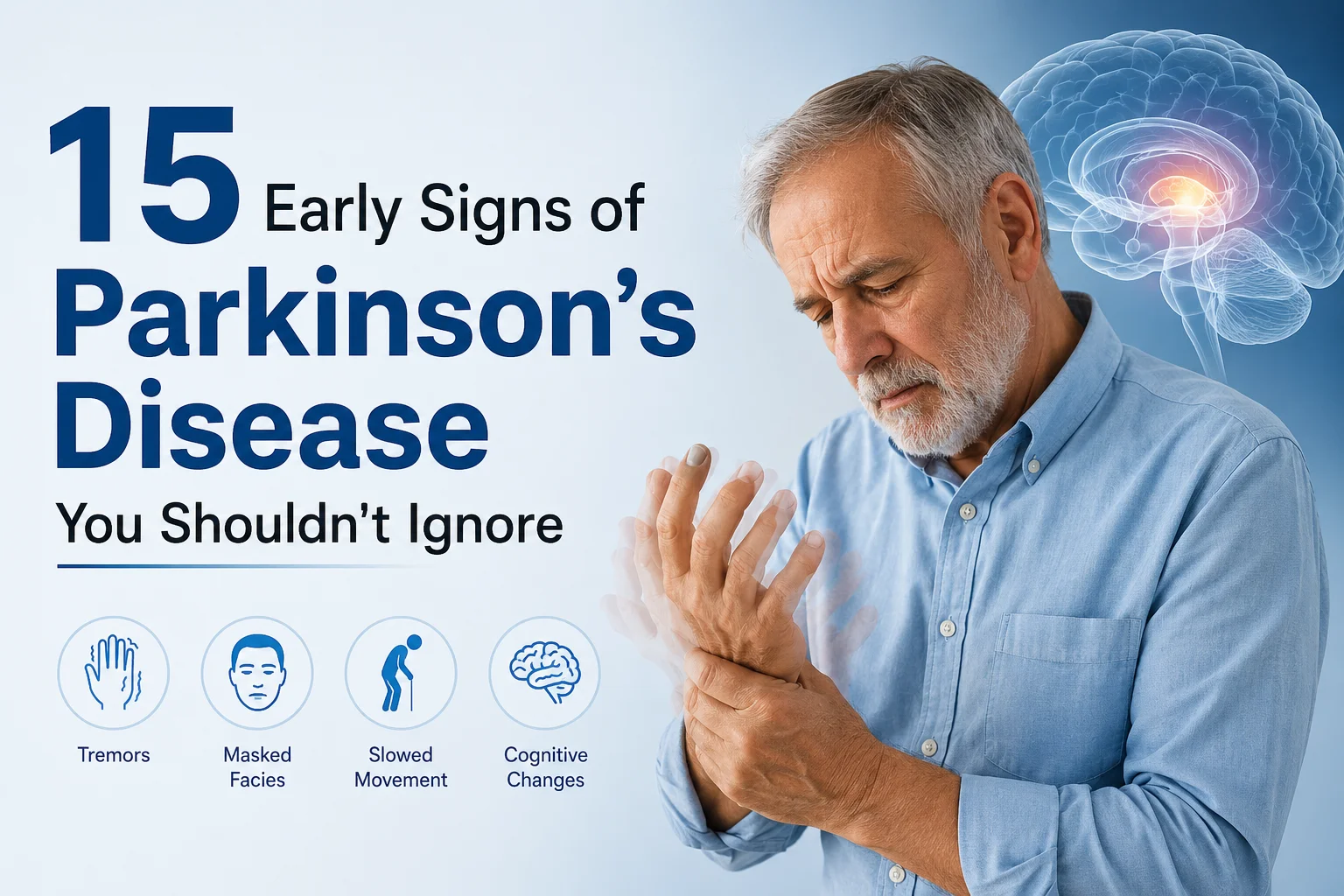
Parkinson’s disease is a progressive neurological condition that affects movement. Early symptoms may develop gradually and can include tremors, stiffness, slower movements and changes in sleep or digestion. Recognizing persistent changes can help you seek appropriate medical advice.
Early signs vary from person to person. Some people develop tremors, while others first notice slower movements, stiffness or changes in walking. No single symptom confirms Parkinson’s disease.
15 Early Signs of Parkinson’s Disease
These symptoms can have several possible causes. Pay attention to changes that persist, worsen or interfere with daily activities.
Tremors in the Hands or Fingers
Involuntary shaking may begin in one hand, finger or arm. Parkinson’s-related tremors are often more noticeable at rest, although not everyone with Parkinson’s develops a tremor.
Slower Movements
Everyday activities such as dressing, buttoning clothes or preparing food may take longer. This slowness is known as bradykinesia.
Muscle Stiffness
Stiffness in the arms, legs or shoulders may make movement uncomfortable and reduce flexibility.
Smaller Handwriting
Handwriting may gradually become unusually small or cramped. This change is called micrographia.
Changes in Walking
Steps may become shorter, walking may slow down, or one arm may swing less naturally while walking.
Reduced Sense of Smell
Difficulty recognizing familiar smells can occur before movement symptoms. Infections and nasal conditions can also cause a reduced sense of smell.
Sleep Disturbances
Some people experience disturbed sleep, vivid dreams or physically acting out dreams, such as kicking or punching during sleep.
Changes in Voice
Speech may become softer or less expressive. Others may frequently ask the person to repeat what they have said.
Reduced Facial Expressions
Blinking may decrease and facial expressions may become less noticeable, even when the person’s feelings have not changed.
Constipation
Constipation can occur in Parkinson’s disease and may precede movement symptoms. Diet, medicines and other conditions are also common causes.
Depression or Anxiety
Mood changes, anxiety or reduced motivation may occur. These symptoms are common in many conditions and do not independently indicate Parkinson’s disease.
Dizziness When Standing
Lightheadedness after standing may result from a drop in blood pressure. Recurrent dizziness deserves medical assessment, especially if fainting occurs.
Shoulder Pain or Stiffness
Shoulder discomfort or restricted movement can sometimes accompany Parkinson’s disease. Persistent pain should be assessed rather than automatically attributed to it.
Changes in Balance and Posture
Some people develop a stooped posture or increasing difficulty with balance. These changes can have several causes and may increase the risk of falls.
Difficulty With Fine Motor Tasks
Fastening buttons, handling small objects or using cutlery may become more difficult because of slowness or stiffness.
When Should You See a Doctor?
Arrange a medical appointment if you notice persistent tremors, unexplained slowness, muscle stiffness, changes in handwriting or progressive difficulty with everyday movements.
A doctor can review your medical history, examine your movements and determine whether referral to a neurologist is appropriate. Do not attempt to diagnose Parkinson’s disease from a symptom checklist alone.
Know the Emergency Warning Signs
Parkinson’s symptoms usually develop gradually. Sudden facial drooping, weakness or numbness on one side, difficulty speaking or sudden loss of balance may indicate a stroke.
Call 112 in India immediately if stroke symptoms occur. Do not wait for the symptoms to improve.
Read: 10 Stroke Symptoms That Require Immediate Medical Attention
Can Parkinson’s Disease Be Treated?
There is currently no cure for Parkinson’s disease, but treatments can help manage symptoms and support quality of life. Treatment plans depend on each person’s symptoms, needs and overall health.
- Medicines prescribed by a qualified doctor.
- Physiotherapy to support movement, flexibility and balance.
- Occupational therapy to help with everyday activities.
- Appropriate physical activity and exercise guidance.
- Regular follow-up with a neurologist or movement disorder specialist.
Early assessment can help identify the cause of symptoms and allow patients and their healthcare team to discuss suitable care.
Frequently Asked Questions
1. What is usually the first sign of Parkinson’s disease?
There is no single first symptom for everyone. Some people notice a resting tremor, slower movements, stiffness, smaller handwriting or a reduced sense of smell.
2. Can Parkinson’s disease start without tremors?
Yes. Some people experience slowness and stiffness without having a noticeable tremor.
3. Does loss of smell mean I have Parkinson’s disease?
No. Reduced smell can result from many conditions and cannot confirm Parkinson’s disease on its own.
4. At what age can Parkinson’s disease begin?
Parkinson’s disease is more common in older adults, but it can also begin at a younger age.
5. Which doctor treats Parkinson’s disease?
A neurologist, particularly one specializing in movement disorders, can evaluate symptoms and discuss treatment.
6. Is there a test that confirms Parkinson’s disease?
Diagnosis generally relies on medical history and a neurological examination. There is no single routine blood test that confirms Parkinson’s disease. Further investigations may be needed in some cases.
Related Articles You May Find Helpful
Final Thoughts
Early signs of Parkinson’s disease may include movement changes, sleep disturbances, constipation and a reduced sense of smell. However, these symptoms can also have other causes.
If symptoms persist or gradually worsen, consult a healthcare professional. An appropriate assessment can help identify the cause and guide the next steps.
Medical disclaimer: This article is intended for general educational purposes only. It does not replace professional medical advice, diagnosis or treatment.


