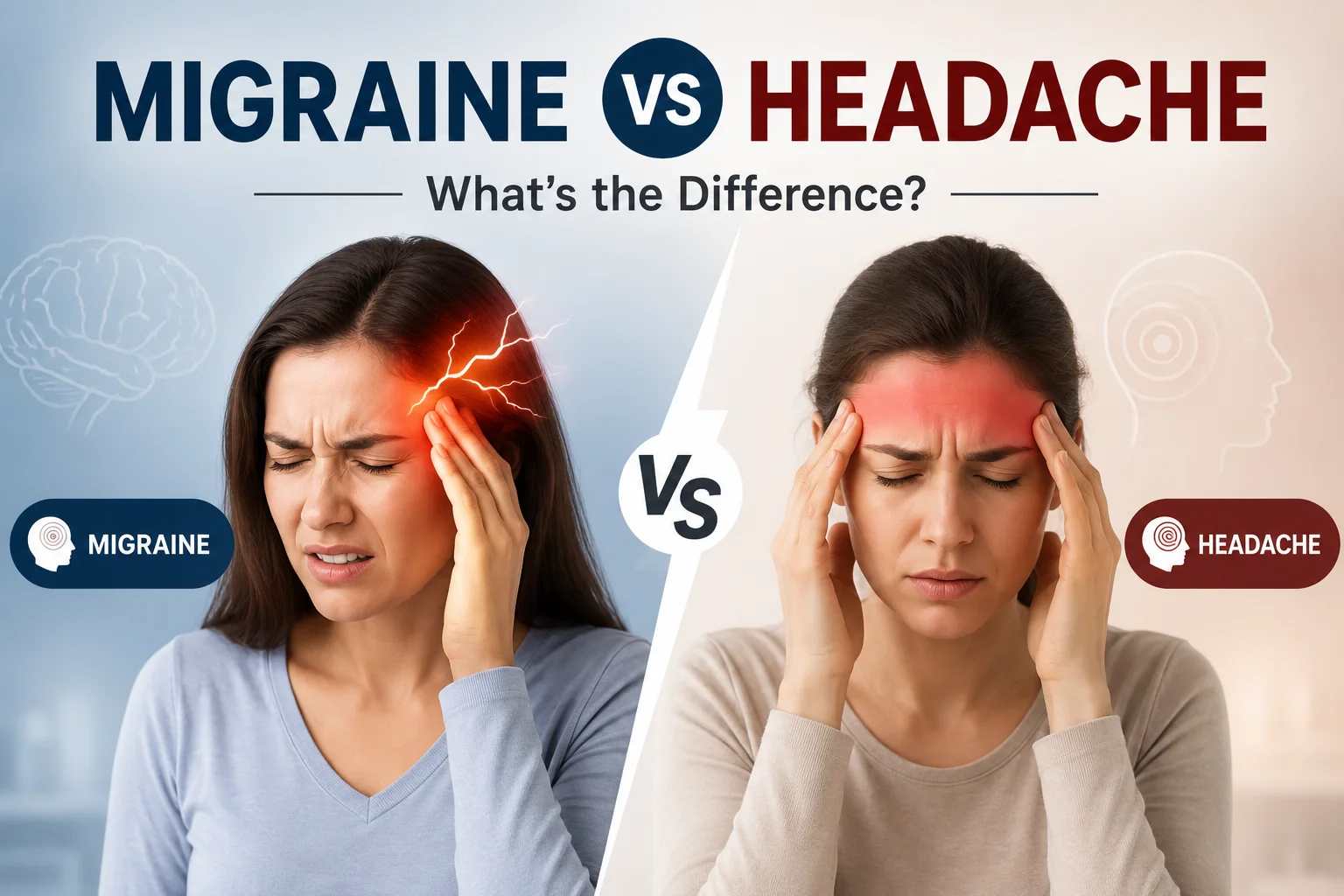
Headaches are common and can occur for many reasons, including stress, dehydration, poor sleep and illness. However, some headaches are part of a neurological condition called migraine. Understanding the difference between migraine and a regular headache can help you recognize symptoms, choose appropriate self-care and know when to seek medical attention.
Migraine is more than just a bad headache. It can cause throbbing head pain, nausea, sensitivity to light and sound, and sometimes temporary visual or sensory disturbances. Ordinary headaches can also be painful, but their symptoms and underlying causes vary.
Call emergency services if you develop a sudden, extremely severe headache, a new headache with weakness or numbness, difficulty speaking, confusion, loss of vision, a seizure, fever with a stiff neck, or a headache after a significant head injury. Do not assume these symptoms are migraine.
Migraine vs Headache: What Is the Difference?
A headache is a symptom involving pain in any part of the head. It may be caused by tension, dehydration, an infection or another condition. Migraine is a neurological disorder involving recurring attacks that can include headache and other symptoms.
| Feature | Common tension-type headache | Migraine |
|---|---|---|
| Pain type | Usually dull, aching or pressure-like | Often throbbing or pulsing |
| Location | Often affects both sides of the head | Often affects one side, but may affect both |
| Pain severity | Usually mild to moderate | May be moderate to severe |
| Movement | Ordinary activity may be tolerated | Movement may worsen the pain |
| Nausea | Usually absent | May occur, sometimes with vomiting |
| Light and sound sensitivity | Possible, but less characteristic | Common |
| Duration | May last from 30 minutes to several days | Often 4 to 72 hours when untreated |
| Other symptoms | Scalp, neck or shoulder tenderness may occur | May include aura, fatigue and sensory changes |
These are typical patterns, not rules that apply to everyone. Migraine can affect both sides of the head, and some tension-type headaches can be severe. A healthcare professional can help determine the cause of recurring or unusual headaches.
What Is a Regular Headache?
A headache is pain or discomfort in the head, scalp or face. One common type is a tension-type headache, which often feels like pressure or a tight band around the forehead or head.
Common headache symptoms include dull pain, pressure around the temples, and tenderness in the scalp, neck or shoulder muscles. Unlike migraine, a tension-type headache usually does not cause vomiting or severe sensitivity to light and sound, although some people may experience mild sensitivity.
Common causes of headaches
- Stress and muscle tension.
- Dehydration or missed meals.
- Insufficient sleep or changes in sleep routine.
- Eye strain or prolonged screen use.
- Colds and other common illnesses.
- Poor posture or neck muscle tension.
- Frequent use of pain-relief medicines, which can contribute to medication-overuse headaches.
Most occasional headaches improve with rest, fluids and appropriate self-care. However, frequent, worsening or unusual headaches should be assessed by a healthcare professional.
What Is a Migraine?
Migraine is a neurological condition that causes recurring attacks. The pain is often throbbing or pulsing and may affect one side of the head, although both sides can be involved. Symptoms can interfere with work, studies, sleep and daily activities.
A migraine attack may include nausea, vomiting, sensitivity to light, sensitivity to sound and worsening pain during ordinary movement. Some people also experience temporary neurological symptoms known as aura.
Common migraine symptoms
- Moderate or severe throbbing head pain.
- Pain that may worsen during physical activity.
- Nausea or vomiting.
- Sensitivity to bright lights, sounds or smells.
- Difficulty concentrating.
- Fatigue before or after an attack.
- Visual disturbances, tingling or other aura symptoms in some people.
Not everyone experiences all these symptoms. Some people have migraine without aura, while others experience aura before or during the headache. A clinician can help distinguish migraine from other causes of head pain.
How Can You Tell Whether It Is a Migraine or a Headache?
1. Notice the type of pain
A tension-type headache often feels like pressure, tightness or a dull ache. Migraine pain is frequently throbbing and can become intense enough to interrupt normal activities. Pain quality alone cannot confirm a diagnosis.
2. Check for nausea and vomiting
Nausea and vomiting are common features of migraine but are less typical of a tension-type headache. Repeated vomiting with a severe or unusual headache should be medically assessed.
3. Notice sensitivity to light and sound
People with migraine may find ordinary lighting or everyday sounds uncomfortable during an attack. Resting in a quiet, dark room may help them feel more comfortable.
4. Consider whether movement makes it worse
Migraine pain may worsen during walking, climbing stairs or other routine movement. Tension-type headaches may be less affected by ordinary activity.
5. Look for aura symptoms
Some people experience flashing lights, zigzag lines, blind spots, tingling or difficulty speaking as part of migraine aura. Aura symptoms usually develop gradually and are temporary, but a first episode, an unusual episode or new weakness or speech difficulty requires urgent medical assessment because other serious conditions can look similar.
What Causes Migraines and Headaches?
Headaches and migraines can have different causes. Migraine involves complex changes in brain and nervous system activity, and genetic factors may contribute to susceptibility. Tension-type headaches are often associated with pain-sensitive structures and may be influenced by stress or muscle tension.
Common migraine triggers
- Irregular sleep or insufficient sleep.
- Skipping meals or going too long without eating.
- Stress or changes in stress levels.
- Hormonal changes, including menstruation in some people.
- Bright lights, strong smells or certain sounds.
- Changes in caffeine intake.
- Weather or environmental changes for some individuals.
Triggers vary from person to person. A suspected trigger does not necessarily cause every attack, and you do not need to eliminate large groups of foods without a clear reason. A headache diary can help identify useful patterns.
How Long Does a Migraine or Headache Last?
A tension-type headache may last from around 30 minutes to several hours, and sometimes longer. The duration depends on its cause and the individual.
An untreated migraine attack in adults commonly lasts between 4 and 72 hours. Some people also experience fatigue, difficulty concentrating or a drained feeling after the head pain improves.
Seek medical advice if a headache lasts longer than usual, keeps returning, becomes progressively worse or interferes with daily life. A prolonged migraine attack, especially one lasting more than 72 hours, needs prompt medical assessment.
Migraine vs Headache: Treatment and Relief
The right treatment depends on the type of headache, its severity, how often it occurs and the person’s medical history. A treatment that works for one person may not be appropriate for another.
Ways to manage an occasional headache
- Drink water if you may be dehydrated.
- Eat regular meals and avoid prolonged fasting.
- Rest and maintain a consistent sleep schedule.
- Take breaks from screens and adjust your posture.
- Use over-the-counter pain relief only when suitable and according to the label or professional advice.
Ways to manage migraine
- Rest in a quiet, dark room during an attack if that helps.
- Drink fluids and maintain regular meals.
- Identify personal triggers using a headache diary.
- Discuss migraine-specific medicines with a healthcare professional.
- Ask about preventive treatment if attacks are frequent or disabling.
Some people benefit from prescription treatments for acute attacks or medicines intended to prevent future attacks. The choice depends on the diagnosis, other medical conditions, current medicines and individual risks.
Important: Frequent use of pain-relief medicines can itself cause medication-overuse headaches. If you need headache medicine regularly or on multiple days each week, consult a healthcare professional rather than repeatedly increasing the dose.
When Should You See a Doctor for Headaches?
Arrange a medical appointment if your headaches occur frequently, become more severe, change in pattern, do not improve with appropriate treatment or interfere with work, sleep or daily activities.
A healthcare professional may ask about your symptoms, duration, triggers, medical history and medicines. Depending on the findings, they may recommend an examination or further investigations.
- A sudden, extremely severe headache that reaches peak intensity rapidly.
- New weakness, numbness or facial drooping.
- Difficulty speaking, confusion or difficulty walking.
- Sudden loss of vision or new double vision.
- A headache with fever and a stiff neck.
- A seizure, loss of consciousness or a severe headache after a head injury.
Do not assume these symptoms are caused by migraine, even if you have had migraines before. Call emergency services immediately.
Can Migraines Be Prevented?
Migraines cannot always be prevented, but some people can reduce the frequency of attacks through a combination of medical care and consistent daily habits.
- Keep a regular sleep and wake schedule.
- Eat meals at consistent times.
- Stay hydrated.
- Exercise regularly according to your abilities.
- Manage stress using suitable relaxation techniques.
- Track headaches, symptoms, medicines and possible triggers.
- Discuss preventive treatment with your doctor if attacks are frequent or disabling.
These steps do not replace medical treatment. If headaches are becoming more frequent or severe, ask a healthcare professional to review your symptoms and treatment plan.
Frequently Asked Questions
Is migraine more serious than a normal headache?
Migraine can be disabling and may significantly affect daily life, but the severity of pain alone does not tell you whether a headache is dangerous. Sudden severe pain or neurological symptoms require urgent assessment.
Can a migraine occur on both sides of the head?
Yes. Migraine often affects one side of the head, but it can affect both sides. The location of the pain alone cannot establish the diagnosis.
Can stress cause migraine?
Stress may trigger or worsen migraine attacks in some people and can also contribute to tension-type headaches. Stress is not the only cause of migraine, and recurring symptoms deserve appropriate assessment.
Can dehydration cause headaches?
Yes. Dehydration can cause or contribute to headaches and may be a trigger for some people with migraine. Drinking fluids may help when dehydration is the cause, but it does not treat every type of headache.
When should I consult a neurologist?
Consider specialist assessment if headaches are frequent, disabling, difficult to control, changing in pattern or associated with concerning symptoms. Seek emergency care rather than waiting for a routine appointment if sudden neurological warning signs develop.
Can taking painkillers too often make headaches worse?
Yes. Frequent use of some headache medicines can contribute to medication-overuse headaches. A doctor or pharmacist can help you determine safe use and whether preventive treatment may be appropriate.
Final Thoughts
The key difference between migraine and a common tension-type headache is the overall pattern of symptoms. Migraine often causes throbbing pain, nausea and sensitivity to light or sound, while tension-type headaches more commonly feel like pressure or tightness.
However, headaches have many possible causes, and symptoms alone cannot always identify the underlying condition. If headaches are frequent, worsening or disrupting your daily life, seek medical advice. Sudden severe headache or new neurological symptoms require emergency assessment.
When Should You See a Neurologist?
Medical disclaimer: This article is for general educational purposes only. It does not replace professional medical advice, diagnosis or treatment. Consult a qualified healthcare professional about persistent or concerning headaches. Seek emergency care for sudden severe headaches or new neurological symptoms. Have this article reviewed by a qualified medical professional before publication.


