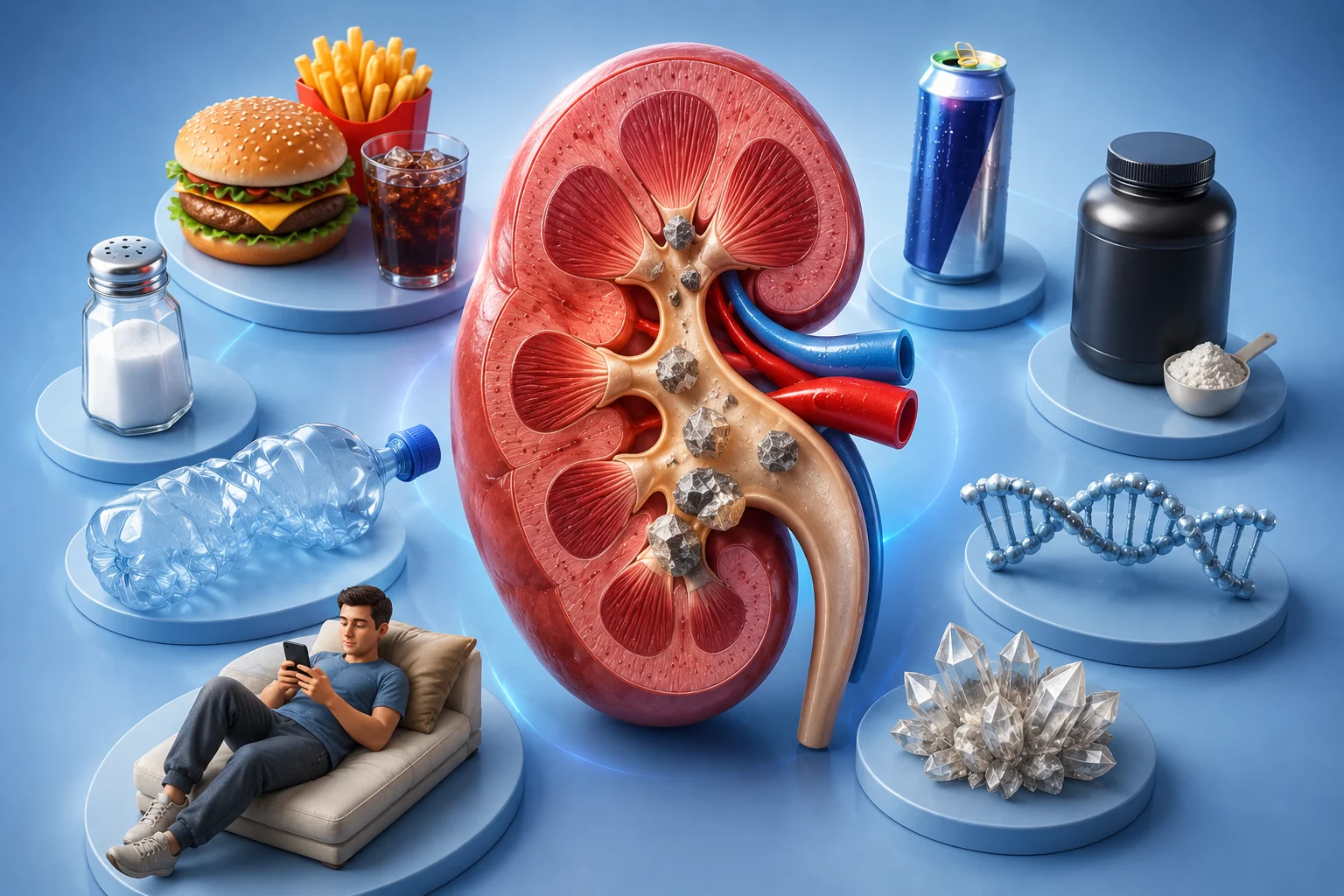
Kidney stones are not just a problem for older adults. Young adults can develop them too, sometimes experiencing sudden, intense pain in the back, side or lower abdomen. A stone may form when certain minerals and other substances in urine become concentrated and form crystals.
Not everyone with kidney stones has the same cause. Drinking too little water, consuming too much salt, family history, certain medical conditions and changes in urine chemistry can all play a role. Understanding your individual risk factors is an important step towards preventing future stones.
Get urgent medical assessment if you suspect a kidney stone and have severe pain, fever, chills or vomiting. A stone that blocks urine flow alongside an infection can be dangerous. If you cannot pass urine or feel seriously unwell, seek emergency care.
What Are Kidney Stones?
Kidney stones are hard deposits made from minerals and other substances in urine. They can develop in one or both kidneys and vary in size, from tiny crystals to stones large enough to block part of the urinary tract.
Small stones may pass without causing noticeable symptoms. Larger stones can get stuck as they travel from the kidney towards the bladder, causing severe pain, bleeding or problems with urine flow.
The most common type is a calcium stone, often made of calcium oxalate. Other types include uric acid, struvite and cystine stones. The type matters because the most effective prevention plan can differ from one person to another.
10 Common Causes of Kidney Stones in Young Adults
1. Not Drinking Enough Water
When you do not drink enough fluids, your urine becomes more concentrated. This makes it easier for stone-forming substances to collect and form crystals.
Young adults who work long hours, travel frequently, exercise in hot weather or forget to drink during the day may be at risk of dehydration.
What may help: Drink water regularly throughout the day and increase fluid intake when you sweat more, unless your doctor has advised you to restrict fluids.
2. Eating Too Much Salt
A high-sodium diet can increase the amount of calcium released into urine, raising the risk of certain calcium-based stones.
Salt can add up through packaged snacks, instant noodles, pickles, papads, restaurant meals, processed foods and salty sauces—not just the salt added during cooking.
What may help: Reduce very salty processed foods and check food labels. You do not need to eliminate every source of salt, but limiting excess sodium can help.
3. A Diet High in Added Sugar
Frequently drinking sugary soft drinks and consuming large amounts of added sugar may contribute to dietary patterns associated with kidney stone risk.
Sugary drinks can also replace water, making it harder to maintain good hydration. The effect of diet depends on the person’s overall eating habits and stone type.
What may help: Choose water more often and limit frequent sugary drinks. Whole fruit can be part of a balanced diet.
4. Too Much Animal Protein
Large amounts of animal protein may increase urinary uric acid and change other features of urine in ways that raise the risk of certain stones.
This does not mean protein is unhealthy or that everyone should follow a low-protein diet. Your body’s needs depend on your health, activity level and medical history.
What may help: Eat a balanced variety of protein sources. If you have had stones before, ask your clinician whether your intake needs to change.
5. Family History of Kidney Stones
If a close family member has had kidney stones, your own risk may be higher. Inherited differences in how the body handles calcium, oxalate, uric acid or other substances can contribute.
A family history does not mean you will definitely develop stones, but it is worth mentioning during a medical assessment—especially if stones appear at a young age or keep returning.
What may help: Discuss your family history and ask whether testing or a personalised prevention plan is appropriate.
6. Certain Medical Conditions
Some conditions increase the likelihood of kidney stones by changing the levels of substances in urine or affecting how the body absorbs and processes minerals.
Examples include hyperparathyroidism, gout, obesity, certain bowel disorders and some conditions that affect urine flow.
What may help: Manage existing health conditions with professional guidance. Treatment of an underlying problem may be an important part of preventing new stones.
7. Previous Kidney Stones
Once you have developed a kidney stone, you may be more likely to develop another. The risk depends on the stone type, urine chemistry, medical history and whether the original cause has been addressed.
Passing a stone or having it removed does not necessarily remove the reason it formed in the first place.
What may help: If possible, have a passed stone analysed and ask whether blood tests, urine tests or a metabolic evaluation could guide prevention.
8. High-Oxalate Foods in Susceptible People
Oxalate is a naturally occurring substance found in foods such as spinach, some nuts and certain other plant foods. It can contribute to calcium oxalate stones in people who absorb or excrete unusually high amounts of oxalate.
However, these foods are not automatically harmful to everyone. Cutting out healthy foods without knowing your stone type can make your diet unnecessarily restrictive.
What may help: Ask a clinician or dietitian whether oxalate reduction is appropriate for your particular stone type. Maintain an appropriate dietary calcium intake unless advised otherwise.
9. Certain Medicines and Supplements
Some medicines and supplements can affect the levels of stone-forming substances in urine. Risk depends on the product, dose, duration and your individual health.
Examples may include certain diuretics, calcium-containing antacids and some prescription medicines. High-dose supplements should not be assumed to be harmless.
What may help: Tell your doctor about all prescription medicines, over-the-counter products and supplements you take. Do not stop a prescribed medicine on your own.
10. Low Physical Activity and Weight-Related Factors
Some studies link excess body weight and metabolic changes with a higher risk of kidney stones. Long periods of immobility may also increase risk in certain circumstances.
Being inactive does not automatically cause stones, and healthy people can develop them too. The goal is to support overall health rather than blame one lifestyle habit.
What may help: Aim for regular physical activity, a balanced diet and sustainable weight management when appropriate for your health.
Why Can Kidney Stones Develop at a Young Age?
Kidney stones can develop early in life when several risk factors overlap. For example, a person may have a family history of stones, drink too little water during a demanding workday and consume a high-salt diet. Another person may develop stones because of a medical condition that changes urine chemistry.
Young age does not rule out kidney stones. If stones occur repeatedly, appear unusually early or affect several family members, a clinician may recommend more detailed testing to identify a possible underlying cause.
Common Symptoms of Kidney Stones
Some kidney stones cause no symptoms until they move or block urine flow. When symptoms occur, they can include:
- Sharp pain in the back or side, often below the ribs
- Pain that spreads towards the lower abdomen or groin
- Pain that comes in waves and changes in intensity
- Blood in the urine, which may look pink, red or brown
- Pain or burning while urinating
- A frequent or urgent need to urinate
- Nausea or vomiting
- Cloudy or unusually strong-smelling urine
These symptoms are not proof of a kidney stone. Other conditions, including urinary tract infections, can cause similar problems. Medical assessment may be needed to confirm the cause.
A blocked urinary tract with infection can become a medical emergency. Seek urgent care if you have fever, chills, severe pain, vomiting or difficulty passing urine.
How Are Kidney Stones Diagnosed?
A healthcare professional may ask about your symptoms, medical history, family history, medicines, diet and previous stones. Depending on the situation, tests may include:
- Urine tests: To look for blood, signs of infection or other abnormalities.
- Blood tests: To assess kidney function and check substances such as calcium when appropriate.
- Imaging: An ultrasound or CT scan may be used to locate a stone and check whether it is causing a blockage.
- Stone analysis: If you pass or have a stone removed, laboratory analysis may identify its composition.
- Additional urine testing: People with recurrent or high-risk stones may need tests to assess their urine chemistry.
Not everyone needs every test. The choice depends on symptoms, age, pregnancy status, medical history and the clinician’s assessment.
How to Help Prevent Kidney Stones
1. Drink Enough Fluids
Regular fluid intake—mainly water—is one of the most important ways to reduce stone risk. The amount you need depends on your activity, climate, health and stone history. People who sweat heavily may need more fluids, while some people with heart or kidney conditions need individual advice.
2. Reduce Excess Salt
Limit frequent high-sodium foods such as packaged snacks, instant meals and heavily salted restaurant dishes. Read labels where possible and use less added salt in cooking.
3. Keep a Balanced Diet
Eat a varied diet with vegetables, fruits, whole grains and appropriate protein. Avoid extreme diets unless a healthcare professional has recommended a specific plan for your stone type.
4. Do Not Eliminate Dietary Calcium Without Advice
Despite the name, calcium stones do not mean that everyone should avoid calcium-rich foods. Normal dietary calcium can help bind oxalate in the digestive tract. Restricting calcium unnecessarily may be unhelpful and can affect bone health.
5. Ask About Your Specific Stone Type
Dietary recommendations differ for calcium oxalate, calcium phosphate, uric acid and other stones. A personalised plan is often more useful than following a general online list of foods to avoid.
6. Review Medicines and Supplements
Discuss your medication list with your clinician, particularly if stones recur. Never stop prescribed treatment or start high-dose supplements solely on the basis of an online article.
Foods and Drinks: What Should You Limit?
| Food or drink | Practical guidance |
|---|---|
| Very salty packaged foods | Limit frequent high-sodium choices, as excess sodium can increase risk for some calcium stones. |
| Sugary drinks | Choose water more often and reduce frequent drinks high in added sugar. |
| Large amounts of animal protein | Keep protein intake balanced; individual limits may depend on stone type and health. |
| High-oxalate foods | Do not remove all of them automatically. Ask whether specific changes are needed for your stone type. |
| Calcium-rich foods | Do not cut out normal dietary calcium unless your clinician has advised a specific change. |
| Supplements and energy products | Review ingredients and doses with a healthcare professional if you have a history of stones. |
Frequently Asked Questions
Can young adults develop kidney stones?
Yes. Kidney stones can occur in young adults. Family history, low fluid intake, certain dietary patterns, medical conditions and urine chemistry can all contribute.
What is the most common cause of kidney stones?
There is no single cause for every person. Concentrated urine and an excess of stone-forming substances play an important role. Low fluid intake is a common modifiable risk factor, but medical and inherited factors also matter.
Does drinking less water cause kidney stones?
Not drinking enough fluids can make urine more concentrated, increasing the chance of crystals forming. Regular hydration is an important prevention measure, although it cannot eliminate every risk.
Should I stop eating spinach, nuts or calcium-rich foods?
Not automatically. Some foods contain oxalate, but they can also provide important nutrients. Normal dietary calcium may help reduce oxalate absorption. Ask a clinician or dietitian which dietary changes fit your stone type.
Can kidney stones come back after treatment?
Yes. Stones can recur if the underlying risk factors remain. Stone analysis, appropriate urine or blood testing and an individual prevention plan can help reduce future risk.
Can kidney stones pass without surgery?
Some small stones pass naturally, sometimes with prescribed pain relief or medicines to help passage. Larger stones or stones causing blockage, infection or persistent symptoms may need a procedure. A clinician should determine the safest approach.
When should I go to the hospital for kidney stone pain?
Seek urgent medical assessment for severe pain, fever, chills, vomiting or difficulty passing urine. Fever or chills with a suspected stone are particularly concerning because an infected blockage can be dangerous.
Related Health Articles
Medical disclaimer: This article is for general educational purposes only. It does not replace professional medical advice, diagnosis or treatment. Seek care from a qualified healthcare professional for symptoms of kidney stones or concerns about recurrence.


