Kidney stones can cause anything from mild discomfort to sudden, severe pain. Some stones pass through the urinary tract without a procedure, while others need treatment to break them into smaller pieces or remove them.
If you or someone in your family has been diagnosed with a kidney stone, you may be wondering which treatment is best. The answer depends on the stone’s size, location, symptoms, the possibility of it passing naturally and your overall health.
Seek urgent medical care if you have suspected kidney stones with fever, chills, severe pain or persistent vomiting. A blocked urinary tract with infection can become dangerous. Difficulty passing urine or feeling seriously unwell also requires urgent assessment.
What Are the Four Main Kidney Stone Treatment Methods?
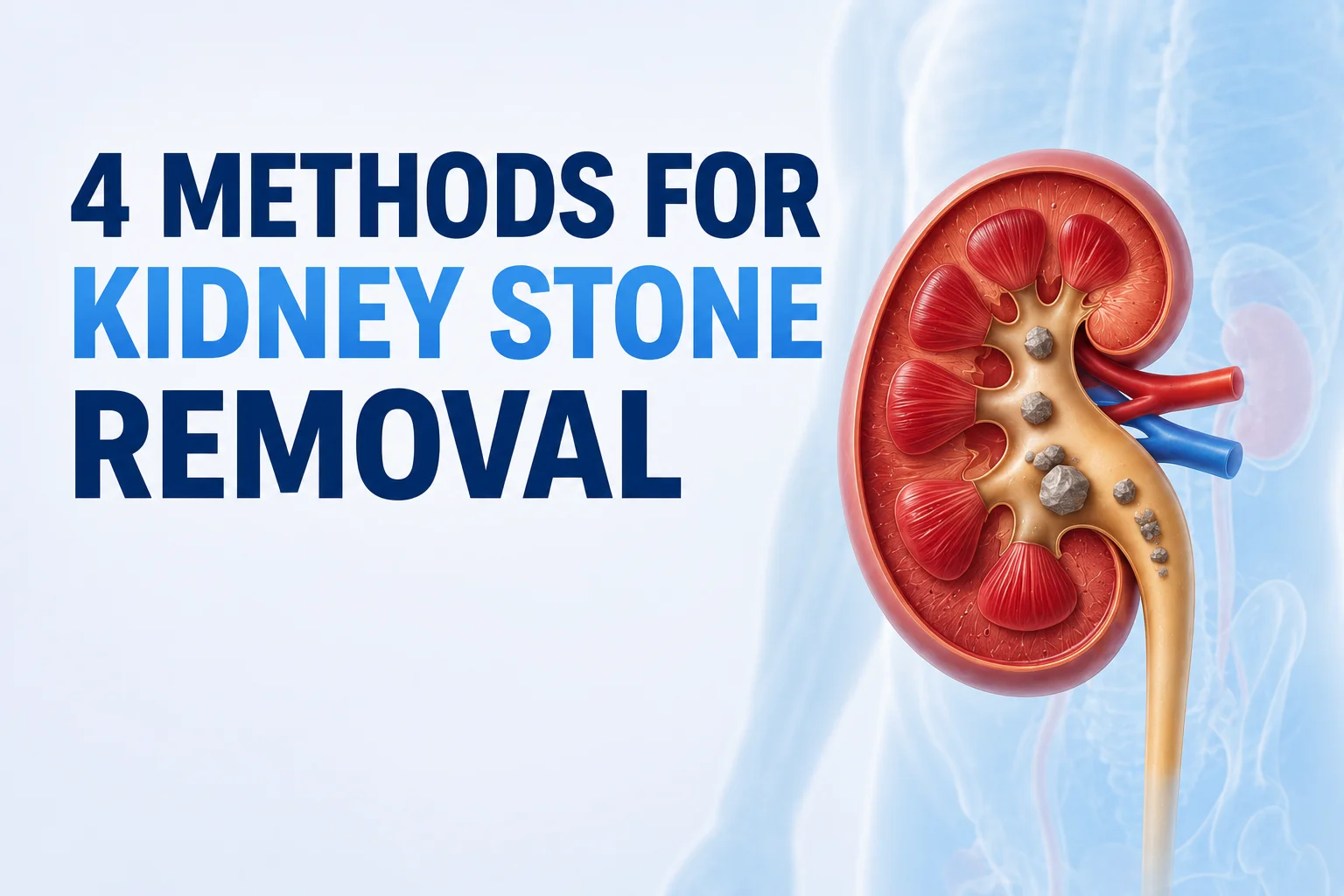
Doctors may recommend one of four broad approaches, depending on the clinical situation:
Allowing a Stone to Pass Naturally
Suitable small stones may pass through the urinary tract with observation, appropriate pain relief and medical guidance.
Shock Wave Lithotripsy (SWL)
Shock waves are directed at the stone from outside the body to break it into smaller fragments.
Ureteroscopy with Laser Treatment
A thin scope is passed through the urinary tract so the doctor can locate, break up or remove the stone.
Percutaneous Nephrolithotomy (PCNL)
A small opening in the back allows the surgeon to reach and remove larger or complex kidney stones.
These approaches are not suitable for every stone. A urologist will consider imaging results, stone size and location, symptoms, infection risk and your medical history before recommending treatment.
1. Natural Passage with Medical Management
Some small kidney stones can pass out of the body during urination without a surgical procedure. Whether this is a reasonable option depends on the stone’s size, location and the person’s symptoms.
How does it work?
A doctor may recommend observation, pain relief and follow-up. In selected cases, prescription medicine may help a stone in the ureter pass. The medicine used and whether it is appropriate depend on the individual case.
Drinking enough fluid helps prevent dehydration, but forcing large amounts of water will not reliably push a blocked stone through. Follow your clinician’s advice, particularly if you have kidney or heart disease or have been told to limit fluids.
Possible advantages
- A procedure may not be necessary if the stone passes safely.
- Some patients can manage symptoms at home with medical guidance.
- There are no surgical incisions when a stone passes naturally.
Limitations
- Passing a stone can be painful and may take time.
- Some stones are unlikely to pass without treatment.
- Follow-up may be needed to confirm that the stone has passed and urine is flowing normally.
Important: Do not simply wait at home if you develop fever, chills, severe pain, persistent vomiting or difficulty passing urine. These can indicate a complication requiring urgent treatment.
2. Shock Wave Lithotripsy (SWL)
Shock wave lithotripsy is a treatment that uses focused shock waves from outside the body to break a kidney stone into smaller fragments. The fragments may then pass through the urinary tract in urine.
What happens during SWL?
The medical team locates the stone using imaging, such as X-rays or ultrasound, and directs shock waves towards it. Pain relief or other medication may be provided depending on the treatment plan and the patient’s needs.
SWL does not involve making an incision to reach the stone. However, it may not be suitable for every stone, and more than one session or a different procedure may be needed.
When might a doctor recommend it?
SWL may be considered for selected kidney or ureter stones when the stone can be targeted and the likelihood of successful treatment is acceptable. Suitability depends on size, position, hardness, body anatomy and other clinical factors.
Possible benefits
- No surgical cut is needed to reach the stone.
- It may be performed as a day procedure.
- Recovery can be relatively quick for some patients.
Possible drawbacks
- Fragments can cause discomfort as they pass.
- Blood in the urine and bruising can occur temporarily.
- Some stones do not break up sufficiently, and repeat treatment or another procedure may be needed.
3. Ureteroscopy with Laser Lithotripsy
Ureteroscopy allows a urologist to reach a stone using a thin viewing instrument called a ureteroscope. The instrument is passed through the urethra and bladder into the ureter or, when appropriate, the kidney.
How is the stone removed?
Once the stone is located, the doctor may use a laser to break it into smaller pieces. Depending on the situation, fragments can be removed using specialised instruments or left to pass naturally.
The procedure is generally performed with anaesthesia. Many patients go home the same day, although the length of stay depends on their health, the procedure and any complications.
What is a ureteral stent?
In some cases, the doctor places a temporary ureteral stent—a thin tube that helps urine drain from the kidney to the bladder. A stent may be useful when swelling, fragments or other factors could affect urine flow.
A stent can cause urinary urgency, discomfort or blood in the urine. It also needs to be removed or exchanged according to the medical team’s instructions. Ask your doctor whether you will need one and how its removal will be arranged.
Possible benefits
- The surgeon can directly see the stone.
- The stone can often be broken or removed during the procedure.
- It may be an option when SWL is unsuitable or has not worked.
Possible risks and limitations
- Temporary pain or blood in the urine may occur.
- Infection, ureteral injury or other complications are possible.
- A stent or an additional procedure may sometimes be required.
4. Percutaneous Nephrolithotomy (PCNL)
Percutaneous nephrolithotomy, commonly called PCNL, is a procedure used for larger or complex kidney stones. The surgeon reaches the kidney through a small opening made in the back rather than passing an instrument all the way up from the bladder.
How does PCNL work?
The procedure is usually performed under general anaesthesia. The surgeon creates a channel into the kidney and uses specialised instruments to locate and remove the stone. Larger stones may be broken into smaller pieces before removal.
PCNL is commonly considered for large kidney stones, including many stones greater than about 2 cm, and certain complex stones. The precise choice depends on the stone and the patient’s circumstances.
Possible benefits
- It can treat large or complex stones that may be difficult to manage with other methods.
- It allows the surgeon to remove substantial stone material through a direct approach.
Possible risks and recovery
- It is more invasive than SWL and usually requires a hospital stay.
- Bleeding, infection and injury to nearby structures are possible complications.
- Some patients need a temporary drainage tube, stent or additional treatment.
- Recovery varies depending on the procedure and the person’s overall health.
Your surgeon will explain the expected benefits, risks and recovery plan before treatment.
Comparison of the Four Kidney Stone Treatment Methods
| Treatment | How it works | When it may be considered | Key point |
|---|---|---|---|
| Natural passage | The stone passes during urination, with medical guidance. | Selected small stones that are likely to pass safely. | Follow-up may be needed to confirm passage. |
| SWL | Shock waves break the stone into fragments. | Selected stones that can be targeted effectively. | Fragments must pass, and repeat treatment may be needed. |
| Ureteroscopy with laser | A scope reaches the stone; laser energy breaks it up. | Ureter or kidney stones when direct treatment is appropriate. | A temporary stent may be needed. |
| PCNL | The surgeon reaches the kidney through a small opening in the back. | Large or complex kidney stones. | More invasive, with a different recovery and risk profile. |
This table is a general guide, not a way to choose treatment yourself. Your urologist will recommend an approach based on imaging, symptoms, stone characteristics and medical history.
How Do Doctors Decide Which Method Is Best?
There is no single kidney stone removal method that is best for everyone. A urologist may consider:
- Stone size: Smaller stones are more likely to pass naturally, while larger stones may need a procedure.
- Stone location: A stone in the kidney may be managed differently from one stuck in the ureter.
- Stone composition and hardness: Some stones are more difficult to break with shock waves.
- Symptoms: Persistent or severe pain may change the treatment plan.
- Urine flow: A blockage can require prompt intervention.
- Infection: Infection with an obstructed urinary tract needs urgent medical management.
- Overall health: Pregnancy, medicines, bleeding risk and other medical conditions may affect the safest option.
- Previous treatment: The results of earlier procedures can help guide the next step.
What Tests May Be Needed Before Kidney Stone Removal?
Before recommending treatment, the medical team may use:
- Imaging: Ultrasound or CT may show the stone’s size, position and whether urine flow is obstructed.
- Urine tests: These can check for blood or signs of infection.
- Blood tests: These may assess kidney function and other relevant health factors.
- Medical history and medication review: This helps the team assess anaesthesia and treatment risks.
Not every patient needs every test. Your doctor will explain which investigations are appropriate for you.
Recovery After Kidney Stone Treatment
Recovery depends on the procedure, the stone, your health and whether a complication occurs. Some patients return to everyday activities relatively quickly, while others need more time and follow-up.
- Follow the discharge instructions provided by your hospital.
- Take prescribed medicines as directed.
- Drink fluids according to your clinician’s advice.
- Attend follow-up appointments and imaging if recommended.
- Ask how and when any stent or drainage tube will be removed.
- If you pass stone fragments, ask whether they should be collected for analysis.
Contact your medical team if symptoms worsen or you are uncertain about your recovery. Seek urgent care for fever, chills, severe or worsening pain, persistent vomiting or difficulty passing urine.
Can Kidney Stones Come Back After Removal?
Yes. Removing a stone does not always remove the reason it formed. Recurrence can be linked to low fluid intake, high sodium intake, certain medical conditions, inherited factors or differences in urine chemistry.
If you have recurrent stones, your clinician may recommend stone analysis, blood tests or a 24-hour urine collection to help identify the cause. Prevention advice can then be tailored to your results.
For more information, read our related article: 10 Common Causes of Kidney Stones in Young Adults.
Frequently Asked Questions
What are the four main methods of kidney stone removal?
The four broad approaches discussed here are allowing suitable stones to pass naturally with medical guidance, shock wave lithotripsy (SWL), ureteroscopy with laser treatment and percutaneous nephrolithotomy (PCNL). Doctors choose based on the stone and the patient’s health.
Can kidney stones pass without surgery?
Some small stones pass naturally. Other stones may require medication, a procedure or surgery. A healthcare professional can assess whether observation is safe for your particular stone.
Is laser treatment always better than shock wave treatment?
No. Both treatments have advantages and limitations. The best option depends on the stone’s size, location, hardness, the likelihood of successful treatment and your medical circumstances.
Is PCNL used for large kidney stones?
PCNL is commonly considered for large or complex kidney stones, including many stones greater than about 2 cm. The final decision depends on imaging, anatomy, symptoms and the surgeon’s assessment.
Will I need a stent after kidney stone removal?
Not everyone needs a stent. A urologist may place one temporarily to help urine drain or to manage swelling or fragments. Ask about stent care and the planned removal date if one is placed.
How long does recovery take after kidney stone removal?
Recovery varies by procedure and individual health. Some people resume normal activities quickly, while others need a longer recovery period. Follow your hospital’s instructions rather than relying on a fixed timeline.
When should kidney stone pain be treated as an emergency?
Seek urgent medical care for severe pain, fever, chills, persistent vomiting or difficulty passing urine. A suspected stone with signs of infection can be particularly dangerous.
Medical disclaimer: This article provides general educational information and does not replace a medical consultation, diagnosis or treatment plan. A qualified urologist should assess suspected kidney stones and explain the benefits and risks of available treatments.


