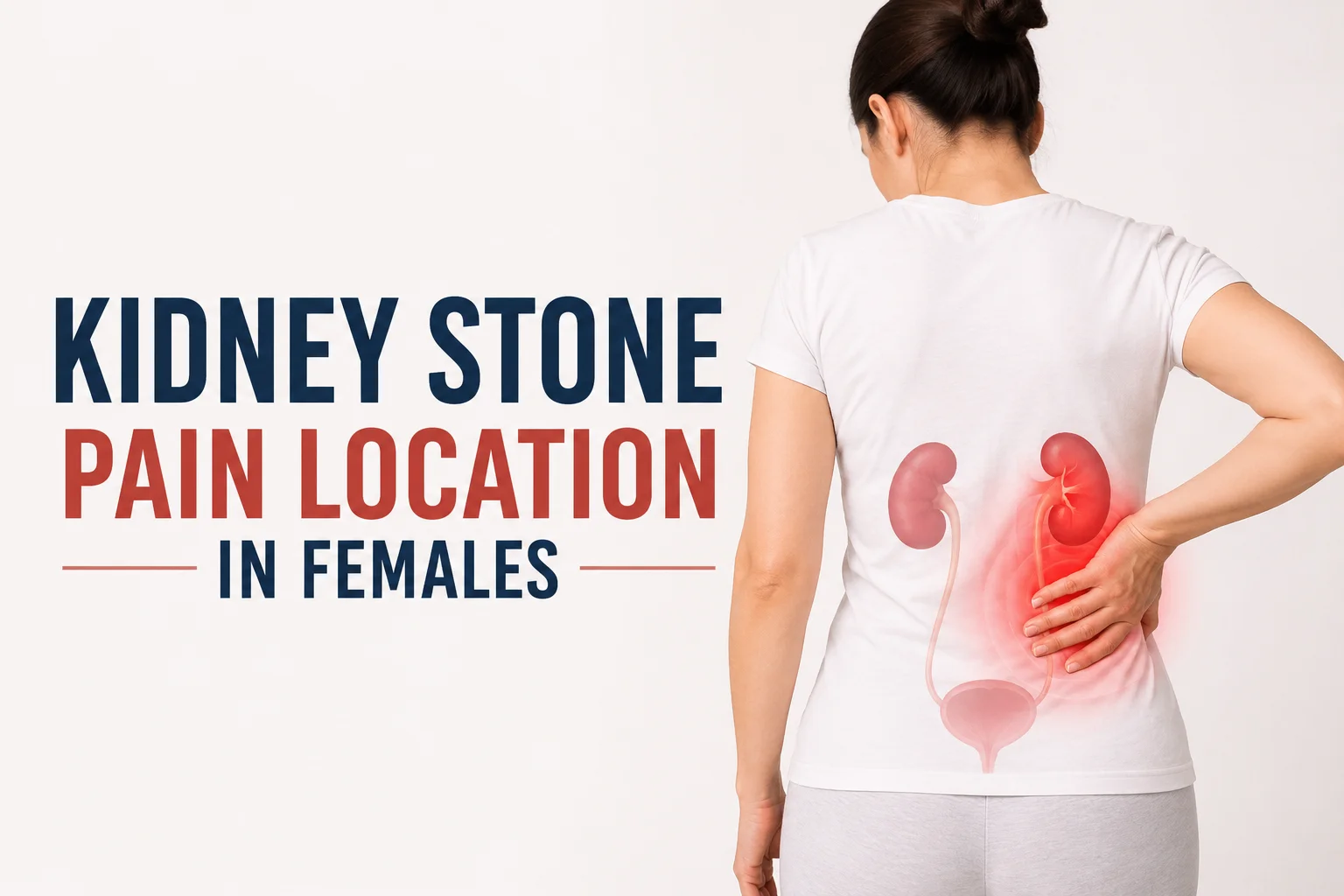
Kidney stone pain in females can begin in the side or back, just below the ribs, and spread towards the lower abdomen, pelvis or groin. The pain may be severe, come in waves and occur with nausea, vomiting, blood in the urine or a frequent urge to urinate. However, not every woman with a kidney stone experiences the same symptoms, and some small stones cause no noticeable pain.
If you are trying to understand where kidney stone pain occurs in women, knowing the usual pain pattern can help you describe your symptoms to a healthcare professional. It cannot confirm that you have a kidney stone, because urinary infections, menstrual problems, ovarian conditions and other illnesses can cause similar pain.
Important: Know when to get urgent medical help.
Severe pain with fever or chills, repeated vomiting, or difficulty passing urine can indicate a serious problem. Seek urgent medical assessment. If you cannot pass urine, feel very unwell or have severe symptoms, go to an emergency department.
In This Article
- Where is kidney stone pain located in females?
- How does the pain move?
- Other symptoms of kidney stones
- Can kidney stones cause pain on the left or right side?
- Kidney stone pain versus period pain and UTI
- Kidney stone pain during pregnancy
- How are kidney stones diagnosed?
- What should you do if you suspect a kidney stone?
- Warning signs that need urgent care
- Frequently asked questions
Where Is Kidney Stone Pain Located in Females?
The typical location of kidney stone pain is the flank, which is the side of the body between the lower ribs and the hip. The pain is often felt on one side of the back or abdomen, depending on where the stone is and whether it is blocking the flow of urine.
1. Side of the back, below the ribs
Pain may begin below the rib cage on the right or left side. It can feel sharp, deep or cramping. Some people experience intense pain that comes and goes, while others have more continuous discomfort.
2. Side or front of the abdomen
As a stone moves into the ureter, the narrow tube that carries urine from the kidney to the bladder, the pain may be felt more towards the side or front of the abdomen. It can become severe enough to interrupt normal activities.
3. Lower abdomen and pelvic area
A stone lower down in the ureter may cause pain near the lower abdomen or pelvis. In women, this can sometimes feel similar to menstrual cramps or other pelvic pain.
4. Groin or outer genital area
Pain may spread towards the groin or labia, the outer folds of the genital area. This pattern can occur when a stone moves farther down the ureter. It does not mean that the stone is located inside the reproductive organs.
The exact location and direction of pain vary from person to person. Not every stone causes pain that travels through all these areas. The pain pattern can provide a clue, but a medical examination and appropriate tests are needed to determine the cause.
How Does Kidney Stone Pain Move in Females?
Kidney stone pain can change location as a stone moves through the urinary tract. A stone that blocks the flow of urine can increase pressure in the urinary system and cause pain. The following pattern is common, but it is not the same for everyone.
- Pain near the flank: Discomfort may begin in the back or side below the ribs.
- Pain towards the abdomen: The discomfort may shift towards the side or front of the belly.
- Pain lower in the abdomen or pelvis: As the stone travels down the ureter, pain can be felt lower in the body.
- Pain near the groin: A stone near the lower ureter may cause pain that spreads into the groin or outer genital area.
Kidney stone pain may come in waves, with periods when it becomes less severe and then returns. Some people feel restless and have difficulty finding a comfortable position. Nausea and vomiting can also occur.
This pattern is not a reliable way to identify the stone’s exact size or location. Avoid using the direction of pain alone to decide whether you need treatment.
Other Symptoms of Kidney Stones in Females
Pain is a common symptom of kidney stones, but other urinary or digestive symptoms may occur. Some patients have only a few symptoms, and small stones can sometimes pass without noticeable discomfort.
- Blood in the urine: Urine may appear pink, red or brown, although blood can also be detected only on a urine test.
- Nausea or vomiting: Severe pain can make some people feel sick or vomit.
- Frequent urination: You may feel the need to urinate more frequently, particularly when a stone is close to the bladder.
- Pain or burning during urination: This can occur with a stone but may also indicate a urinary tract infection.
- Passing only a small amount of urine: A blockage may interfere with urine flow. Inability to pass urine requires urgent care.
- Cloudy or unpleasant-smelling urine: This can occur with a urinary infection and should not automatically be attributed to a stone.
Fever and chills are particularly concerning when kidney stones are suspected because they can indicate an infection. An infected, obstructed urinary tract can become a medical emergency.
Can Kidney Stones Cause Pain on the Left or Right Side?
Yes. Kidney stones can form in either kidney, so pain may occur on the left or right side. The side of the pain may correspond to the affected urinary tract, but pain location alone cannot confirm that a kidney stone is present.
| Pain location | Possible explanation |
|---|---|
| Right flank or back | A right kidney or ureter stone is one possibility, but other abdominal or muscular causes must be considered. |
| Left flank or back | A left kidney or ureter stone is one possibility, among other causes of pain. |
| Lower abdomen or groin | A stone lower in the ureter may cause pain here, but pelvic and urinary conditions can cause similar symptoms. |
| Both sides or widespread abdominal pain | This pattern needs medical assessment rather than assumptions about kidney stones. |
Severe pain in the right lower abdomen, particularly with fever or worsening tenderness, can also have causes such as appendicitis. Sudden pelvic pain may need urgent assessment for a gynaecological emergency.
Kidney Stone Pain vs Period Pain vs UTI
Women can experience several conditions that cause pain in similar areas. Understanding the common patterns may help you describe your symptoms, but it is not enough to diagnose the cause at home.
| Condition | Common features | Important point |
|---|---|---|
| Kidney stone | Severe pain in the side or back that may spread to the lower abdomen or groin; nausea or blood in the urine can occur. | Pain may come in waves. A stone can sometimes cause an obstruction or infection. |
| Menstrual cramps | Cramping in the lower abdomen or pelvis, often around the start of menstruation; pain may spread to the lower back or thighs. | New, unusually severe or persistent pelvic pain should not automatically be assumed to be period pain. |
| Urinary tract infection (UTI) | Burning during urination, frequent or urgent urination and lower abdominal discomfort; urine may look cloudy or contain blood. | Fever, chills or flank pain may indicate a more serious infection involving the kidneys. |
| Ovarian or other pelvic condition | Pelvic or lower abdominal pain that may be one-sided or associated with menstrual changes or vaginal bleeding. | Sudden severe pain, fainting or possible pregnancy requires urgent medical assessment. |
A urinary tract infection and a kidney stone can occur at the same time. Symptoms alone cannot reliably distinguish them, so a clinician may recommend urine tests, blood tests or imaging.
Read our related guide: 8 UTI symptoms you shouldn’t ignore.
Kidney Stone Pain During Pregnancy
Kidney stones can occur during pregnancy, but abdominal, back or pelvic pain may also be caused by pregnancy-related conditions. It is important not to assume that the pain is due to a stone without a medical assessment.
If you are pregnant or could be pregnant and experience significant abdominal, flank or pelvic pain, contact your maternity care team or a healthcare professional promptly. The clinician can decide which tests are appropriate. Ultrasound is commonly used as an initial imaging option during pregnancy, with further evaluation based on the clinical situation.
Seek emergency care immediately if you may be pregnant and have:
- Sudden or severe abdominal or pelvic pain.
- Vaginal bleeding with abdominal pain.
- Shoulder-tip pain, marked dizziness, weakness or fainting.
These can be warning signs of an ectopic pregnancy or another serious condition. Do not wait for the pain to settle.
How Are Kidney Stones Diagnosed?
A healthcare professional will ask about your symptoms, the location and timing of the pain, urinary changes, previous stones, medications and relevant medical history. An examination and appropriate tests help determine whether a kidney stone or another condition is responsible.
Urine tests
A urine test may detect blood, signs of infection or other abnormalities. A urine culture may be needed if an infection is suspected.
Blood tests
Blood tests may help assess kidney function and look for signs of infection or abnormalities that could contribute to stone formation.
Imaging tests
An ultrasound or CT scan may be used to identify a stone, assess its location and size, and check for a blockage. The appropriate test depends on the person’s symptoms, age, pregnancy status and clinical circumstances.
If you have severe or persistent pain, do not delay assessment in the hope that the stone will pass by itself.
What Should You Do If You Suspect a Kidney Stone?
If you suspect a kidney stone, arrange medical assessment so that the cause of the pain and any possible obstruction or infection can be evaluated. Treatment depends on factors such as stone size, location, symptoms, kidney function and whether infection is present.
- Get assessed: Seek prompt medical advice for suspected kidney stone symptoms, particularly when the pain is new, severe or persistent.
- Follow an appropriate pain plan: Ask a healthcare professional which pain medicines are safe for you. Some medicines may be unsuitable during pregnancy or for people with kidney disease, stomach ulcers or certain other conditions.
- Drink fluids sensibly: Maintain hydration if you can drink normally and have not been advised to restrict fluids. Do not force large amounts of water to try to push a stone through, particularly if you have severe pain, vomiting or a suspected blockage.
- Follow the treatment plan: Some stones pass without a procedure, while others need medication, monitoring or a procedure to remove or break the stone.
- Attend follow-up appointments: Follow-up may be needed to check that the stone has passed and kidney drainage is normal.
Small stones may pass on their own, but not every stone can be managed at home. Do not use home remedies as a substitute for assessment when symptoms are severe or warning signs are present.
Learn more: Kidney stone removal methods and treatment options.
When Should You Seek Urgent Medical Care?
Kidney stone pain can be intense, but certain symptoms suggest a complication or another urgent medical problem. Seek urgent medical assessment if you experience any of the following:
- Fever or chills with suspected kidney stone pain: This may indicate a urinary infection that needs prompt treatment.
- Repeated vomiting or inability to keep fluids down: This can lead to dehydration and may require treatment.
- Inability to pass urine or a major reduction in urine output: This can indicate a serious blockage or another urgent problem.
- Severe or uncontrolled pain: Prompt assessment is needed to identify the cause and provide appropriate treatment.
- Blood in the urine: This requires medical evaluation, especially when accompanied by pain or other symptoms.
- Pregnancy or possible pregnancy with abdominal or pelvic pain: This needs careful assessment, particularly with bleeding, dizziness or severe pain.
Seek emergency care if you feel faint, very weak or seriously unwell, or if you have sudden severe abdominal pain. Do not wait for a routine appointment when serious warning signs are present.
How Can You Help Reduce the Risk of Future Kidney Stones?
Kidney stone prevention depends partly on the type of stone you have and why it formed. Advice that is helpful for one person may not be right for another, so people with recurrent stones may benefit from a medical review and specific prevention plan.
- Maintain appropriate hydration: Ask your healthcare professional how much fluid you should drink, especially if you have heart or kidney disease or a fluid restriction.
- Moderate salt intake: A high-sodium diet can increase the risk of some types of stones.
- Eat a balanced diet: Avoid making major dietary restrictions without knowing your stone type and individual needs.
- Do not cut out dietary calcium without advice: Normal dietary calcium intake is often important for preventing common calcium oxalate stones. Your needs depend on your individual situation.
- Discuss recurrent stones with a clinician: Analysis of a passed stone and, in selected cases, urine or blood testing can guide prevention.
Read more: Common causes of kidney stones and factors that may raise the risk.
Frequently Asked Questions
1. Where does kidney stone pain start in females?
It often starts in the side or back below the ribs. It may spread towards the abdomen, lower pelvis or groin as the stone moves through the urinary tract.
2. Can kidney stone pain feel like period cramps?
Yes. A stone lower in the ureter may cause lower abdominal or pelvic pain that resembles menstrual cramps. However, period-related pain, ovarian conditions, infections and other problems can feel similar. New or severe pain needs appropriate assessment.
3. Does kidney stone pain occur on the left or right side?
It can occur on either side, depending on which kidney or ureter is affected. Pain location alone cannot confirm a kidney stone.
4. Can a woman have a kidney stone without blood in her urine?
Yes. Blood may be visible, detected only on a urine test or absent. The lack of visible blood does not rule out a kidney stone.
5. Can kidney stones cause pain while urinating?
They can, particularly when a stone is near the bladder. Burning or painful urination can also indicate a urinary tract infection, so testing may be necessary.
6. Can a kidney stone pass without treatment?
Some small stones pass on their own, but others cause an obstruction, infection or severe pain and need medical treatment. A healthcare professional can advise based on the stone’s size, location and symptoms.
7. Should I drink a lot of water during a kidney stone attack?
Do not force large amounts of fluid to try to flush out a stone. Maintain sensible hydration if you can drink normally and have no fluid restriction, and seek medical advice about the right approach for your symptoms.
8. When is kidney stone pain an emergency?
Fever or chills, repeated vomiting, inability to pass urine, severe uncontrolled pain or feeling seriously unwell requires urgent medical assessment. Pregnancy with severe pelvic pain or vaginal bleeding also requires urgent evaluation.
Conclusion
Kidney stone pain in females commonly occurs in the side or back below the ribs and may spread towards the abdomen, pelvis or groin. Other symptoms can include nausea, vomiting, blood in the urine and changes in urination. However, the pain pattern varies, and similar symptoms can result from urinary infections, menstrual problems or other abdominal and pelvic conditions.
The safest approach is to avoid self-diagnosing based on pain location alone. Seek medical advice for suspected stones and urgent care for fever, chills, repeated vomiting, inability to pass urine or severe pain. Correct diagnosis helps determine whether a stone can pass on its own or needs treatment.
Medical disclaimer: This article is for general educational purposes and is not a substitute for professional medical advice, diagnosis or treatment. Symptoms vary between individuals. Consult a qualified healthcare professional for personalised advice. Seek urgent medical care for severe pain, fever, chills, repeated vomiting, inability to pass urine or other serious symptoms.

