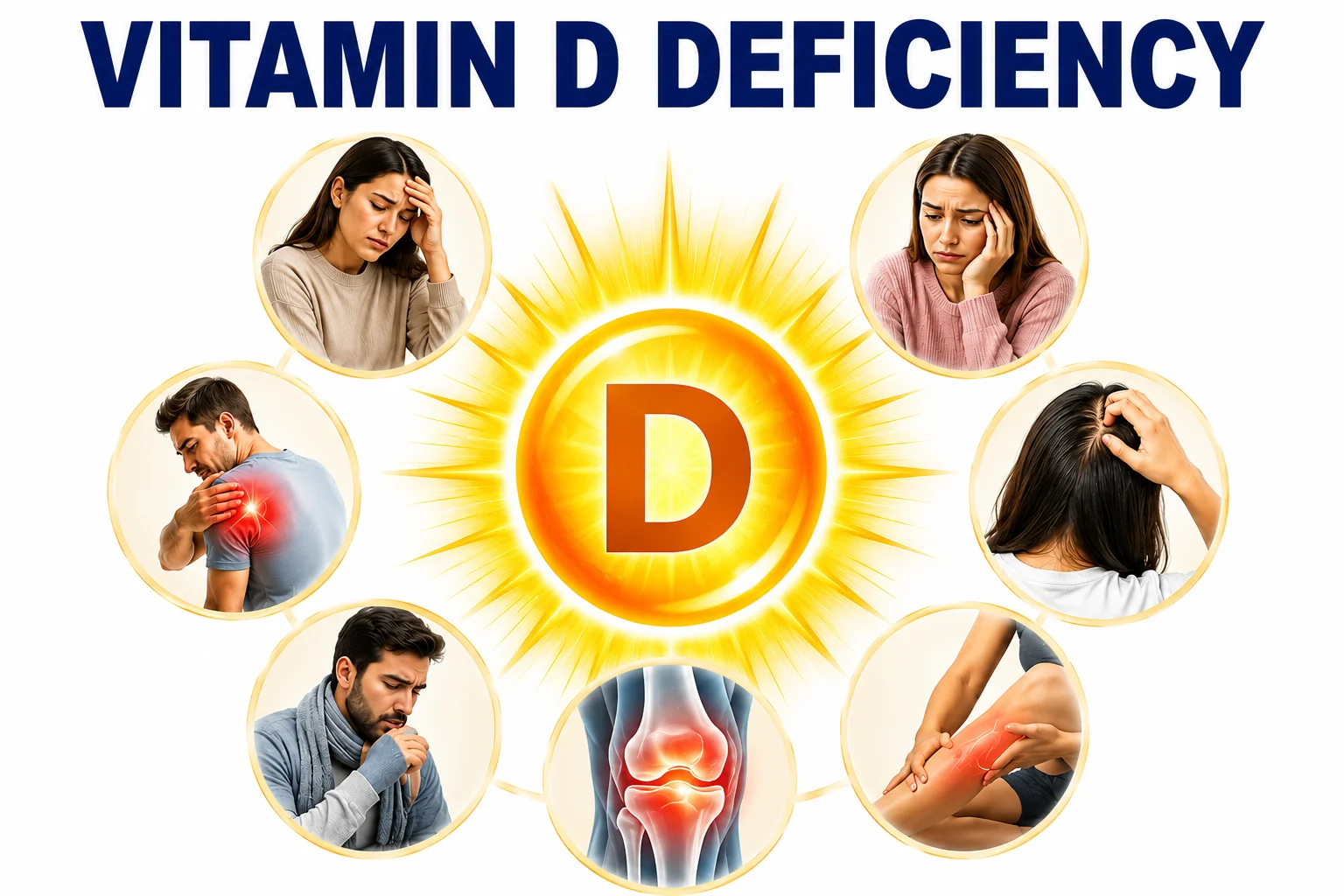
Feeling tired or experiencing muscle aches can make everyday activities more difficult. These symptoms can have many causes, and one possibility a healthcare professional may consider is vitamin D deficiency.
Vitamin D helps your body absorb calcium and maintain healthy bones and muscles. When your body does not have enough vitamin D, you may develop bone or muscle problems. However, many people with low vitamin D levels do not notice any symptoms.
Understanding the possible signs, risk factors and testing options can help you decide when to seek medical advice.
What Are the Common Symptoms of Vitamin D Deficiency?
Vitamin D deficiency does not always cause noticeable symptoms. When symptoms do occur, they may develop gradually and can be difficult to distinguish from other health problems.
Possible signs of significant vitamin D deficiency include:
- Bone pain: Some people experience discomfort in their bones, including the back, hips or legs.
- Muscle weakness: Low vitamin D levels can affect muscle function and make some physical activities more difficult.
- Muscle aches: Muscle discomfort may occur, although it can also result from many other conditions.
- Bone weakness: Severe deficiency can interfere with normal bone mineralisation and increase the risk of bone problems.
- Difficulty with everyday movements: In some cases, muscle weakness can make activities such as climbing stairs or getting up from a chair more challenging.
Can You Have Vitamin D Deficiency Without Symptoms?
Yes. A person can have low vitamin D levels without feeling unwell. This is why symptoms alone cannot reliably identify a deficiency.
If you have risk factors, ongoing bone pain, unexplained muscle weakness or a medical condition that affects nutrient absorption, speak with a healthcare professional about whether a vitamin D blood test is appropriate.
Testing is not routinely necessary for everyone. Your medical history and individual risk factors help determine whether it is useful.
What Causes Vitamin D Deficiency?
Your body obtains vitamin D through a combination of sunlight exposure, food and supplements. A deficiency can develop when these sources do not provide enough vitamin D or when your body has difficulty absorbing or processing it.
- Limited sunlight exposure: Spending most of your time indoors or covering most of your skin outdoors can reduce vitamin D production.
- Low dietary intake: A diet containing few vitamin D sources may contribute to low levels.
- Absorption problems: Conditions affecting the intestines can make it harder for your body to absorb vitamin D.
- Kidney or liver conditions: These organs help process vitamin D into forms the body can use.
- Certain medicines: Some medications can affect vitamin D absorption or metabolism.
Who Is at Greater Risk of Vitamin D Deficiency?
Some people are more likely than others to develop low vitamin D levels. Your risk depends on several factors, including your diet, health conditions and lifestyle.
- Older adults, whose skin produces less vitamin D with age.
- People who spend limited time outdoors.
- People with darker skin, because higher melanin levels reduce vitamin D production from sunlight.
- People with conditions such as coeliac disease or other disorders that affect nutrient absorption.
- People with chronic kidney or liver disease.
- People who have undergone certain weight-loss surgeries.
- People taking medicines that affect vitamin D metabolism.
Having one or more risk factors does not automatically mean that you have a deficiency. A healthcare professional can assess your individual circumstances.
How Is Vitamin D Deficiency Diagnosed?
A healthcare professional may recommend a blood test if your symptoms, medical history or risk factors suggest that your vitamin D levels should be checked.
The commonly used test is called the 25-hydroxyvitamin D blood test. It measures the main circulating form of vitamin D and helps assess whether your level is adequate.
Your results should be interpreted in the context of your health, symptoms and the laboratory’s reference ranges. Different clinical guidelines may use different thresholds when interpreting vitamin D levels.
Do not diagnose yourself based on symptoms or begin high-dose supplements solely because you suspect a deficiency.
How Can You Maintain Healthy Vitamin D Levels?
Maintaining healthy vitamin D levels involves choosing suitable food sources, considering your individual sunlight exposure and seeking medical advice when needed.
1. Include Vitamin D Sources in Your Diet
Foods that contain vitamin D include:
- Fatty fish such as salmon, sardines and mackerel.
- Egg yolks.
- Vitamin D-fortified milk and other fortified foods.
- Fortified plant-based drinks and breakfast cereals, where available.
- Certain mushrooms, particularly those exposed to ultraviolet light.
Check food labels because the amount of vitamin D varies between products. Diet alone may not provide enough for everyone.
2. Be Sensible About Sunlight Exposure
Your skin can produce vitamin D when exposed to sunlight. However, the amount produced varies according to skin pigmentation, season, location, clothing and other factors.
There is no single sunlight schedule that works safely for everyone. Avoid sunburn and excessive ultraviolet exposure, and follow appropriate sun protection guidance.
3. Take Supplements Only When Appropriate
If a deficiency is confirmed or your healthcare professional identifies a need for supplementation, they can recommend an appropriate dose and duration.
Taking more vitamin D than your body needs can be harmful. Excessive supplementation can raise calcium levels in the blood and may damage the kidneys. Avoid high-dose vitamin D treatment without medical guidance.
When Should You Consult a Doctor?
Consider seeking medical advice if you have persistent bone pain, unexplained muscle weakness, a condition that affects nutrient absorption or other concerns about vitamin D deficiency.
Your healthcare professional can assess possible causes, determine whether blood testing is appropriate and recommend treatment if needed.
Seek urgent medical care for severe or rapidly worsening symptoms, difficulty walking or new symptoms that may indicate another serious condition.
Frequently Asked Questions
1. What is the first sign of vitamin D deficiency?
There may be no noticeable first sign. When symptoms occur, bone pain and muscle weakness can be associated with significant deficiency, but neither symptom confirms the diagnosis.
2. Can vitamin D deficiency cause tiredness?
Tiredness can have many causes. It is not a reliable indicator of vitamin D deficiency on its own. A healthcare professional can help assess persistent fatigue.
3. Which blood test checks vitamin D levels?
The 25-hydroxyvitamin D blood test is commonly used to assess vitamin D status. Your healthcare professional can explain whether you need this test and what your results mean.
4. Which foods help provide vitamin D?
Fatty fish, egg yolks, certain mushrooms and fortified foods can provide vitamin D. The amount varies, so check product labels where relevant.
5. Can I take vitamin D supplements without a blood test?
Whether testing or supplementation is appropriate depends on your age, health, risk factors and local medical guidance. Ask a healthcare professional before taking high doses.
6. Can too much vitamin D be harmful?
Yes. Excessive vitamin D supplements can cause dangerously high calcium levels and kidney damage. Follow the dose recommended by your healthcare professional.
Final Thoughts
Vitamin D is important for healthy bones and normal muscle function, but a deficiency does not always cause symptoms. Bone pain and muscle weakness can be signs worth discussing with a healthcare professional, especially when risk factors are present.
Rather than relying on symptoms or taking high-dose supplements on your own, seek appropriate medical advice. If testing confirms a deficiency, a suitable treatment plan can help restore vitamin D levels and protect your long-term bone health.


